
Tom Miazga: Redefining Limits Through Relentless Enthusiasm
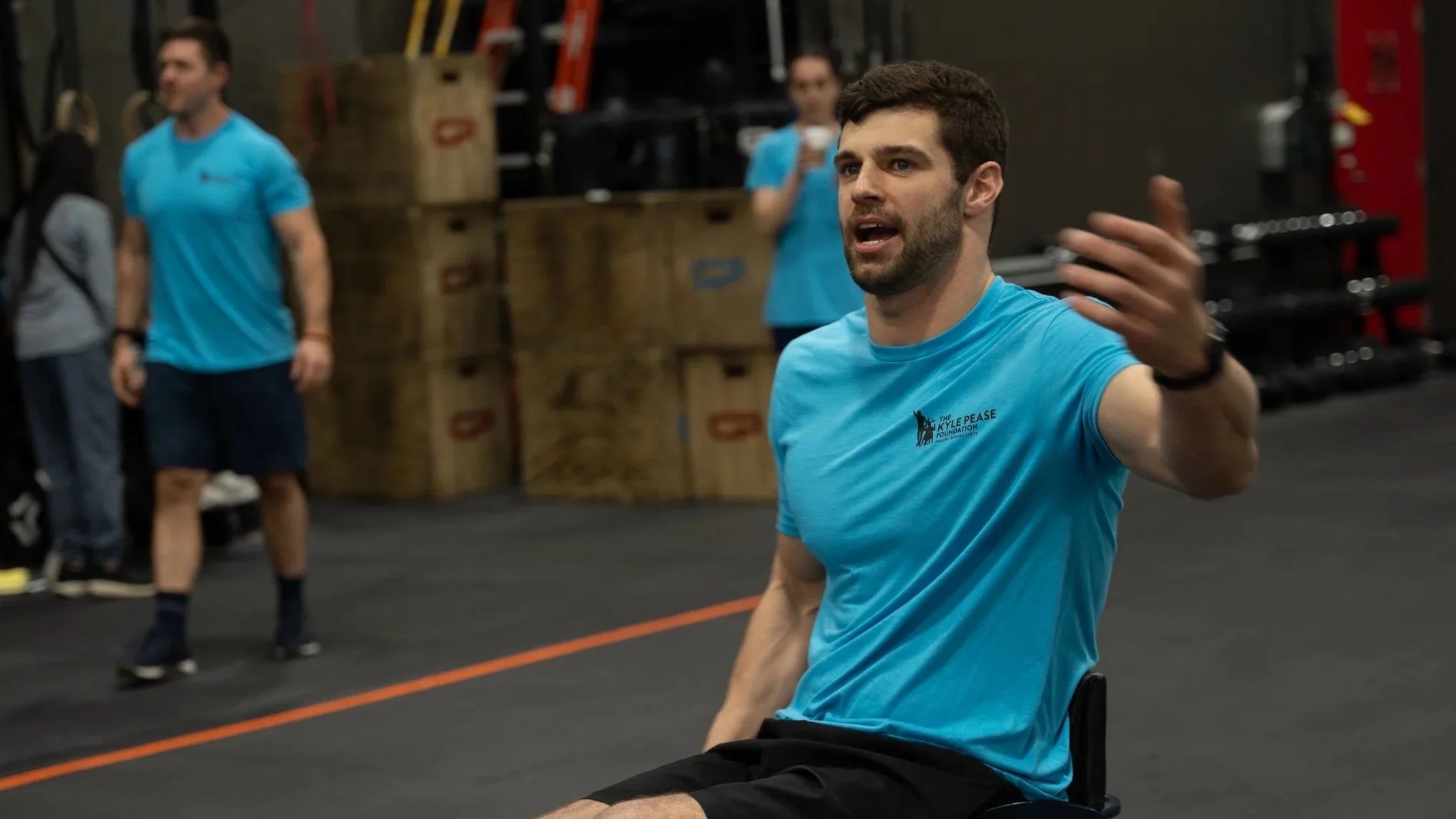
Tom Miazga doesn’t describe his life in terms of limitations. He describes it in terms of momentum. At 35, the Milwaukee native is a full-time athlete and coach, a Paralympic swimmer turned elite CrossFit competitor, and a nine-time “Fittest Seated Man on Earth.” If things go according to plan, he’ll make it ten. But numbers, while impressive, only tell part of the story. What defines Tom isn’t just what he’s achieved. It’s how he’s chosen to interpret the obstacles that shaped him. “I keep thinking of the idea of resilience,” he says, pausing before correcting himself. “But I think the bigger thing is enthusiasm.” That distinction matters. Resilience implies endurance. Enthusiasm implies intention. Tom’s life has always required both. He shared this with athletes from The Kyle Pease Foundation at Training Think Tank, a CrossFit gym in Roswell, Georgia.
Tom grew up just north of Milwaukee, in a neighborhood that, by his own account, gave him everything he needed—support, competition, and a reason to push beyond what others expected of him. Born with cerebral palsy, he faced mobility challenges from an early age. Walking wasn’t intuitive. Movement wasn’t automatic. Things most people never think about, like stepping onto a curb or climbing stairs, required effort, focus, and often frustration. But in his backyard, none of that translated into exclusion.
With three older siblings, Tom was constantly in motion. Baseball, football, climbing, running, whatever the game was, they made space for him. Not by lowering the bar, but by inviting him to reach for it. “They helped me,” he says, “but they also pushed me. They let me try things that maybe I didn’t feel comfortable doing.”
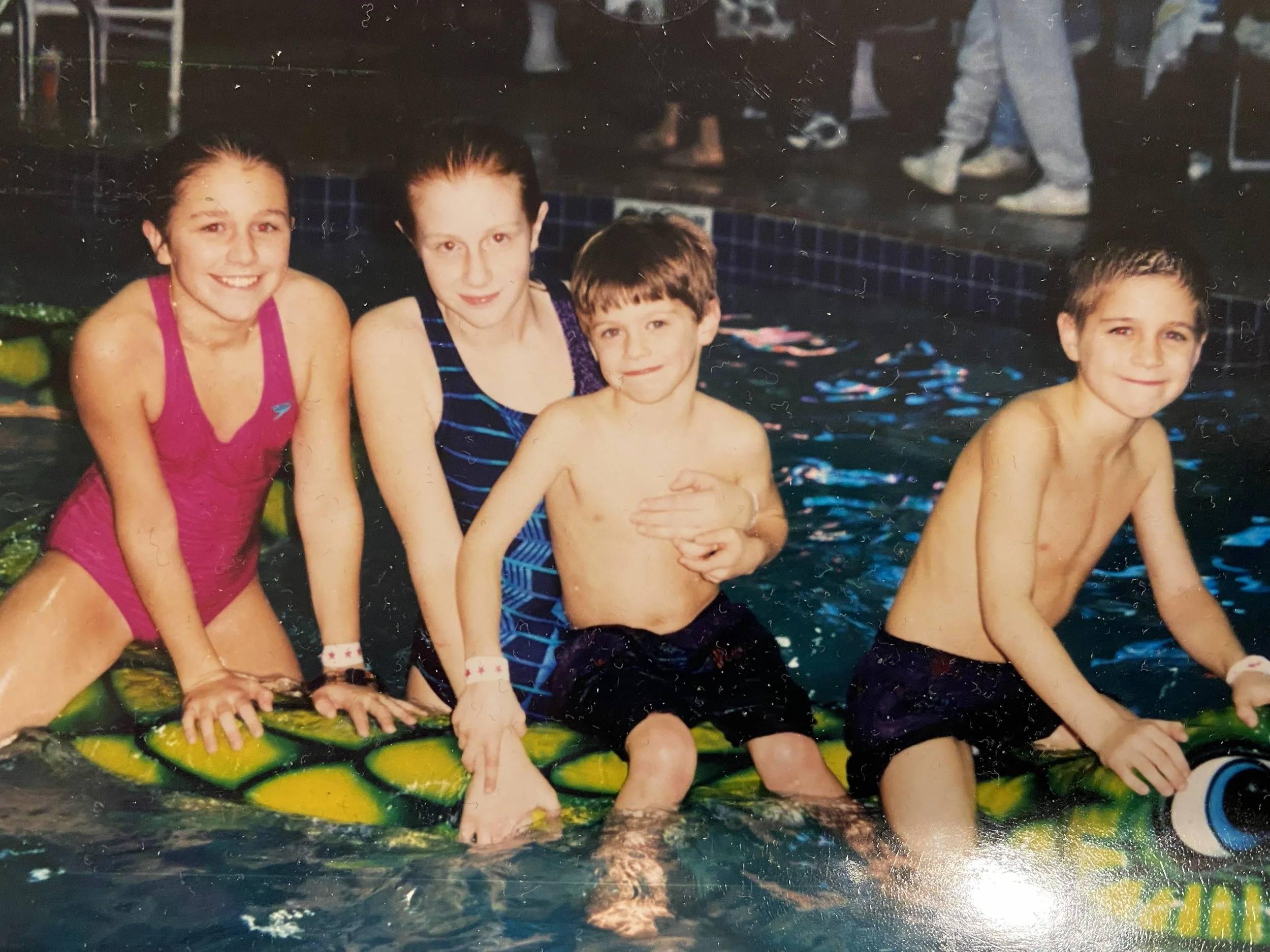
That dynamic became foundational. Because Tom didn’t grow up in a system built for adaptive athletics. There weren’t structured opportunities waiting for him. He had to invent his own ways to participate, to compete, to belong. So, he did.
By second grade, the questions started. Why is he in a wheelchair? Why does he walk like that? Why is he different? They weren’t malicious questions. Just honest ones from kids beginning to notice differences. But they forced Tom into an early awareness of how he was perceived. “It put me in a mindset where I felt like I had to prove myself,” he explains.
Not to prove that he was better, but to prove that he was more than his disability. More than the wheelchair. More than what people assumed when they saw him before they knew him. Fortunately, he wasn’t doing it alone. His family, teachers, and close friends created a support system that reinforced a critical idea early: his identity wasn’t defined by his disability. That clarity didn’t eliminate the struggle, but it gave him direction. Tom speaks openly about something many athletes, especially adaptive athletes overcoming adversity, don’t always articulate: the emotional toll. “I had to mature very quickly,” he says.
That maturity came from constantly navigating a world that didn’t operate at Tom’s pace. His body didn’t always respond the way he wanted it to. Some days, basic movement felt like a negotiation between mind and muscle that he couldn’t fully control. “It’s hard to explain to someone what it feels like when your brain just won’t let your body do something,” he says.
That disconnect created frustration. And over time, that frustration evolved into something more structured. Perfectionism. He pushed himself relentlessly. Held himself to standards that often exceeded reason. Demanded progress, even when progress wasn’t linear. That mindset helped him achieve extraordinary things. But it also came with a cost.
“When things don’t go well, everything feels wrong,” he admits. So, he learned to find release. That release came in the form of swimming.
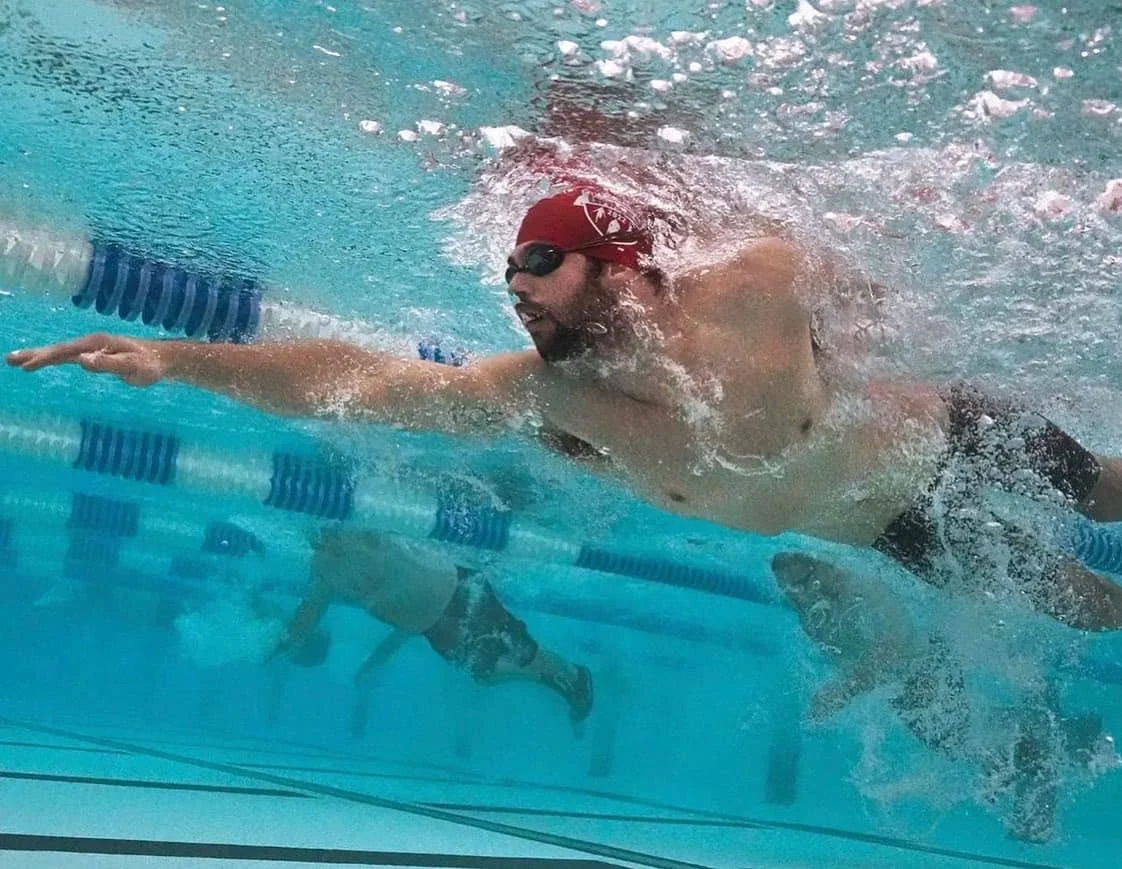
Swimming wasn’t just a sport for Tom. It was a recalibration. The moment he entered the water, something shifted. The resistance of gravity softened. Movement became smoother, more intuitive. His body responded differently. His cerebral palsy was no longer a hurdle. In the water, Tom could build his muscles, endurance, and confidence. “The water made me feel like I could do more,” he says. “It was almost like a superpower.”
But the physical benefits were only part of it. There was also silence. A kind of mental stillness that stripped away comparison, expectation, and noise. In the water, it was just him, his thoughts, his rhythm, his effort.
That space became essential. It gave him control in a life where control wasn’t always guaranteed. And over time, it became the foundation for something much bigger.
Tom swam competitively for 15 years, progressing through national, collegiate, and international levels. His career peaked at the 2008 Beijing Paralympic Games, where he competed among the world’s best. Across his swimming career, he set 13 international records and eight American records. Those achievements did not happen by chance. They were the result of years of disciplined effort, internal conflict, and a refusal to accept imposed limits. But eventually, like all athletes, he reached a crossroads. For most, retirement from swimming is an endpoint. For Tom, it wasn’t.
“I realized I wasn’t done competing,” he says.
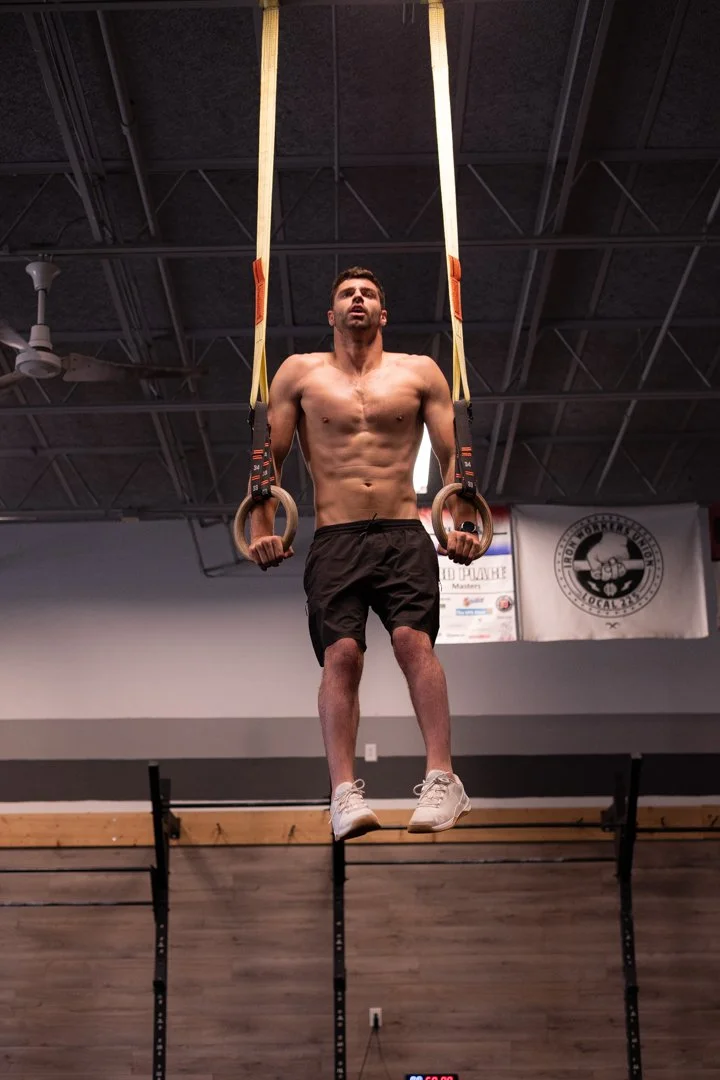
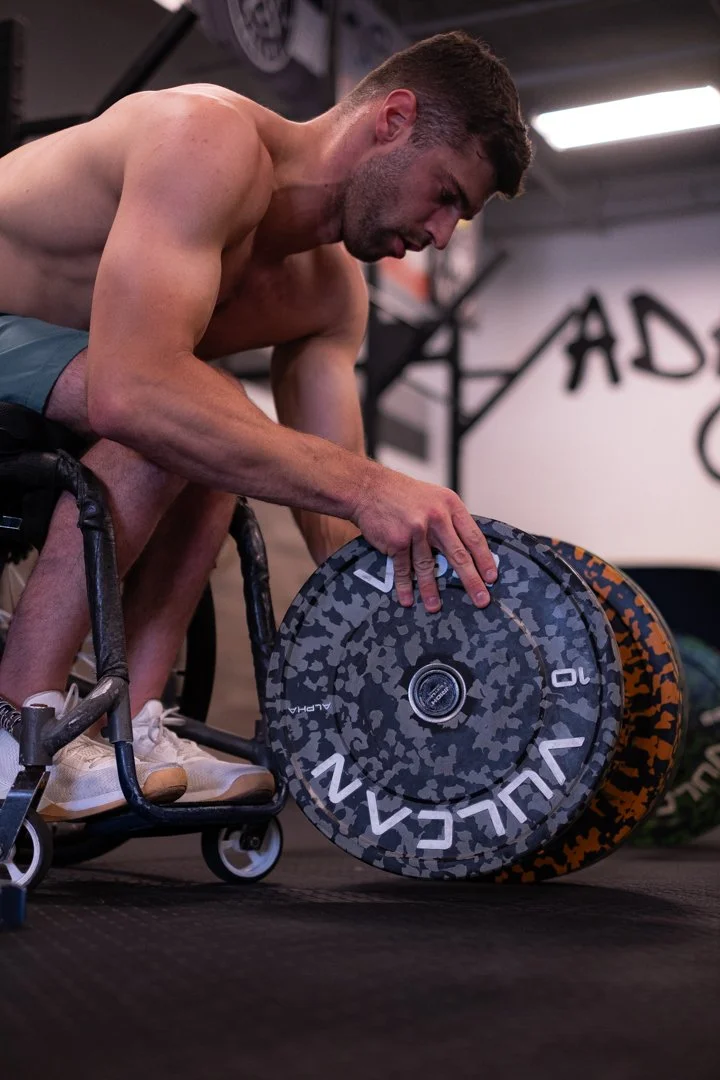
When Tom retired from swimming, he became a fourth-grade teacher and had been looking for something to help him stay in shape so that he could keep up with his students. That led him to CrossFit, a completely different environment, with new challenges, new systems, and new ways to measure performance. Where swimming had provided fluidity and isolation, CrossFit demanded explosiveness, adaptability, and constant variation. Tom embraced it. But it was the community that drew him in. He felt part of the mantra, “Everybody and every body”.
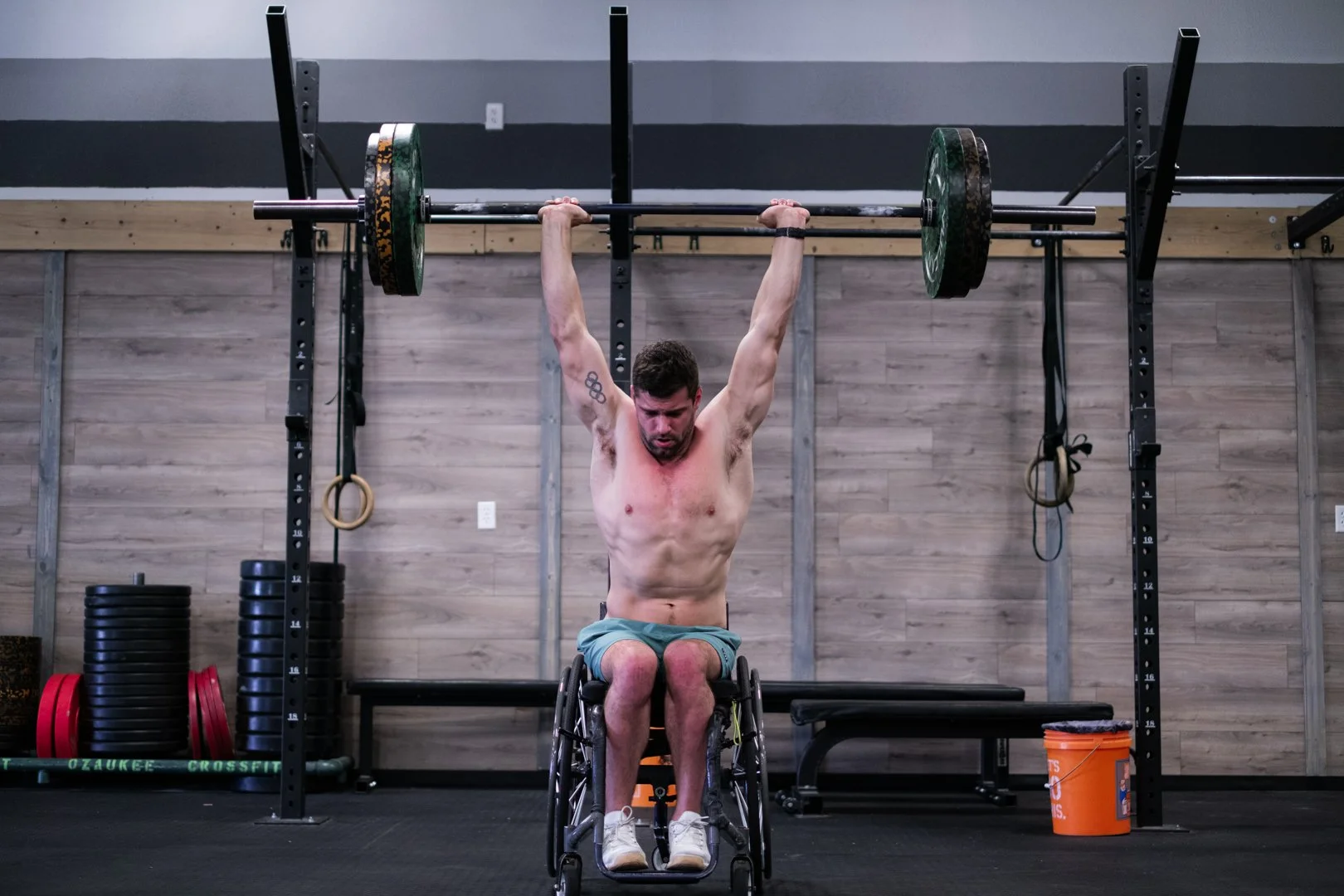
He became the “Fittest Seated Man on Earth.” Then he did it again. And again. Nine times in total. Now, he’s aiming for ten.
What’s remarkable isn’t just Tom’s determination, but his positive, encouraging attitude. Because even after reaching the top, Tom still operates from the same internal drive he developed as a kid: prove what’s possible.
“Nothing worth fighting for comes easy,” Tom says.
There’s a story Tom remembers vividly from childhood—one that still shapes his perspective of himself today. In fifth grade, he slipped stepping onto the starting blocks at a swim meet. Kids laughed. Not cruelly—just instinctively. But what stayed with him wasn’t their reaction. It was his own.
“I was mad at myself,” he says. Not embarrassed. Not ashamed. Angry. Because in his mind, he had failed to meet the standard he set for himself. The standard of proving he belonged. Looking back, he recognizes how harsh that response was.
“If I could talk to 10-year-old me,” he says, “I’d tell him to slow down. You’re okay. Don’t be so hard on yourself.” That perspective didn’t come easily. It came through years of experience, reflection, and learning how to balance ambition with self-compassion.
Ask Tom what he wants people to take away from his story, and he doesn’t talk about medals or titles. He talks about perspective. He talks about effort. And most importantly, he talks about enthusiasm. Not blind optimism. Not forced positivity. But a deliberate choice to engage fully with what’s in front of you, even when it’s difficult, even when it’s unfair, even when it doesn’t make sense. “I can’t control what my body does every day,” he says. “But I can control how I approach it.”
That mindset has allowed him to build a life that isn’t defined by limitations, but by an expansion of potential, of identity, of what others believe is possible.
For all he’s accomplished, Tom doesn’t speak like someone who’s finished. There’s still more to prove. More to explore. More to achieve. Not because he needs validation but because he’s still curious about where his limits actually are. And maybe that’s the most important part of his story.