
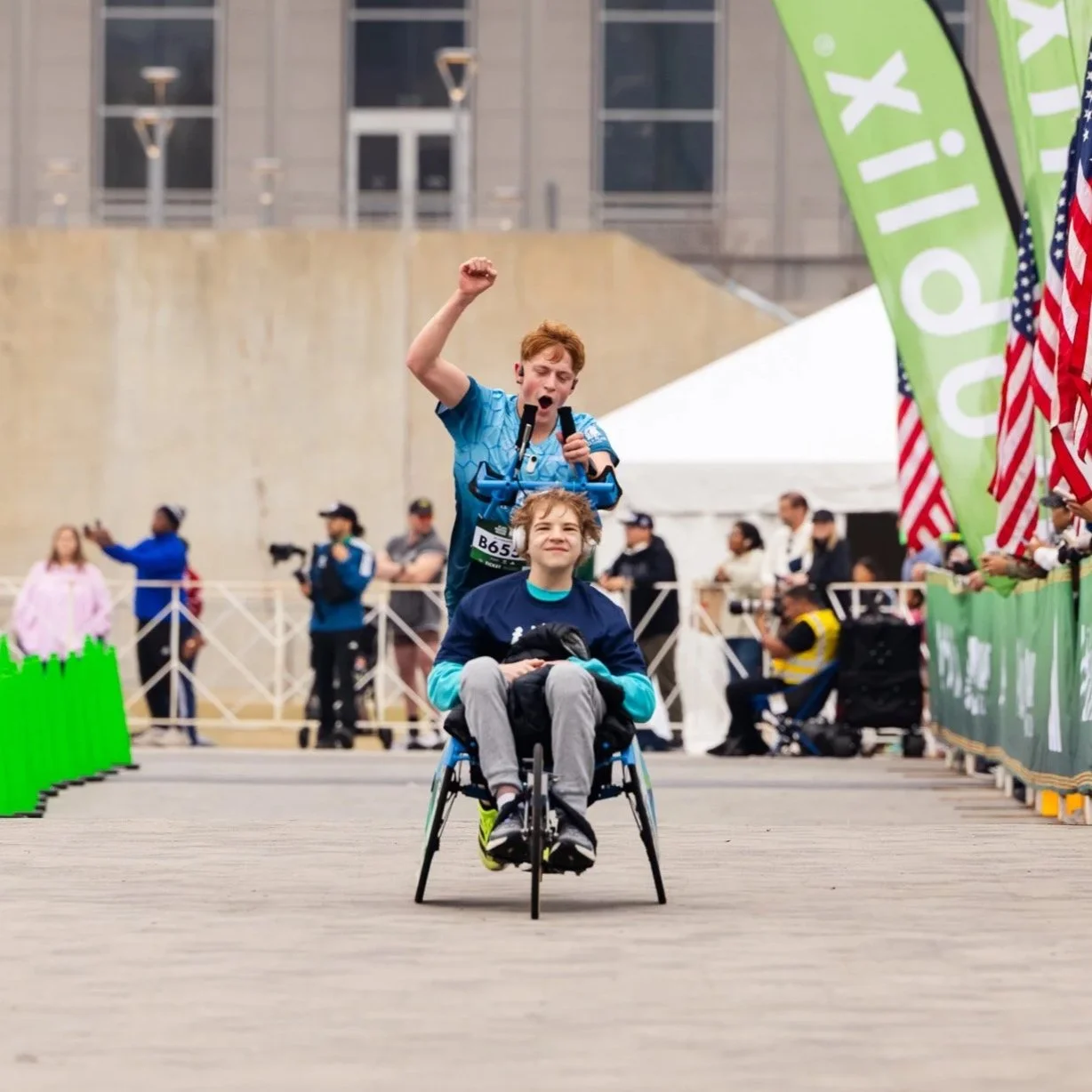
More Than a Race: How One Young Volunteer Athlete Found the Power of Inclusion
One of the biggest lessons Nate learned through volunteering is the importance of empathy and grace. “The athletes motivate me to work harder. They remind me that whatever challenges I’m facing are nothing compared to what some of them deal with every day. That’s something I always keep in mind.”
When he first encountered The Kyle Pease Foundation, Nate Flanders was simply looking for ways to get involved in sports.
On his 12th birthday, he was competing in the John Tanner Tri the Parks Triathlon. He watched in awe as KPF volunteer athletes assisted the para-athletes through the swim segment on inflatable kayaks. Then, as he witnessed Cougar Clifford finishing the bike portion in his hand-crank bike, something clicked.
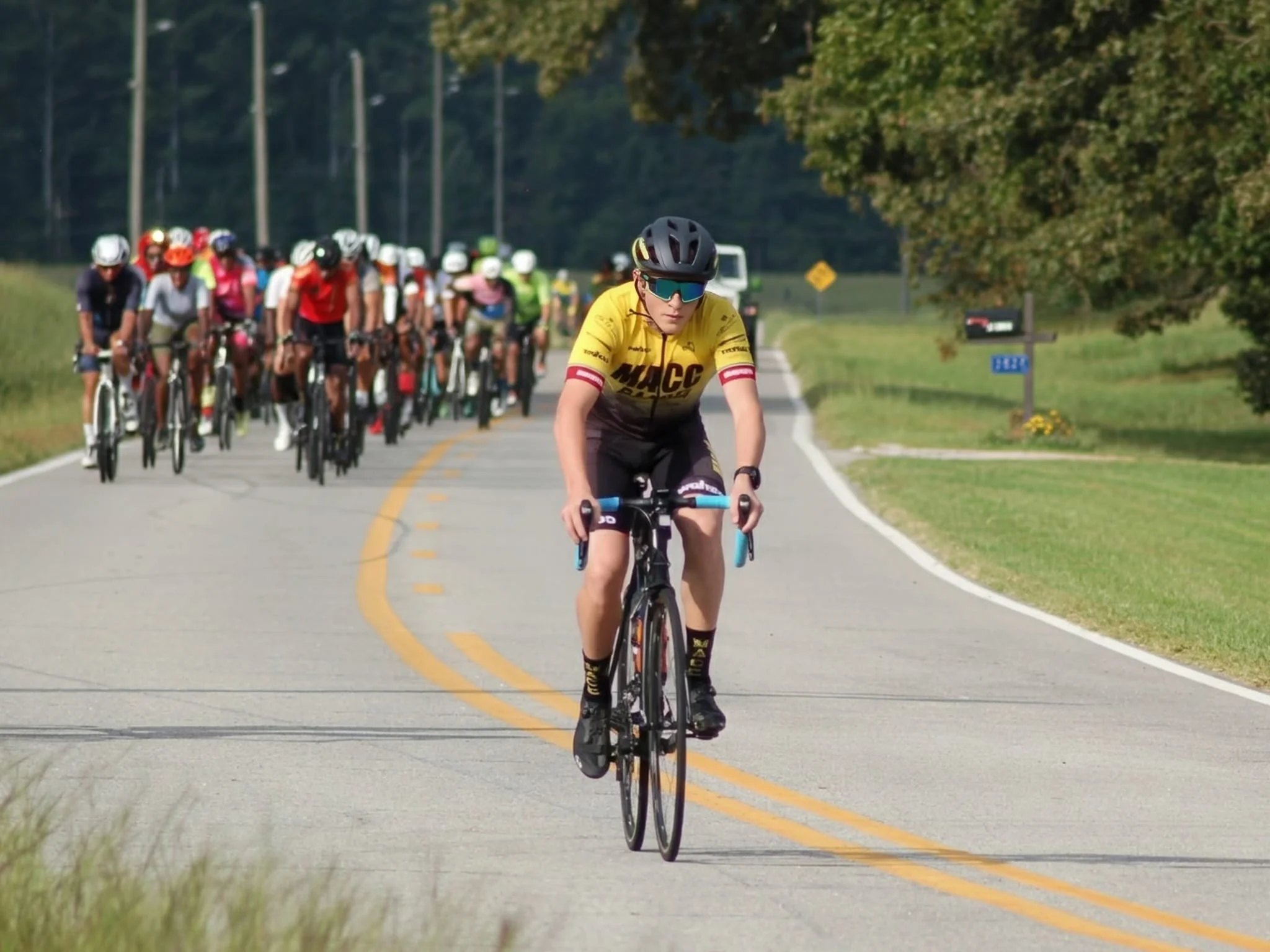
After the race, Nate approached long-time volunteer David Burgos and asked how he could become involved. David told him about the foundation and encouraged him to become an ambassador for KPF, a conversation that marked the beginning of a journey that would change the way Nate viewed sports, teamwork, and inclusion.
As a competitive swimmer and cyclist, Nate, currently in his sophomore year at Lambert High School, is no stranger to discipline and hard work. He has been competitively swimming for 12 years for the Cumming Waves Swim Team. As a member of the Metro Atlanta Cycling Club (MACC), he has been competing for two years.
One of his most memorable experiences as a KPF volunteer athlete was at the 2025 Publix 5k, when he raced with Logan Northrup. The race was going smoothly until the last mile. The bars on the back of Logan’s chair suddenly dropped as they were coming around a corner. Up ahead was a hill. A steep one. The two had to work together to keep momentum and motivation while trying not to lose control.
The experience taught him an important lesson: Make sure the push bars are tight before the race and always carry tools. More importantly, that experience helped forge a friendship filled with jokes and unforgettable memories. For Nate, what is central to KPF mission is providing a space for connection to grow – a grass-roots, family-like atmosphere that encourages community and support for each other.
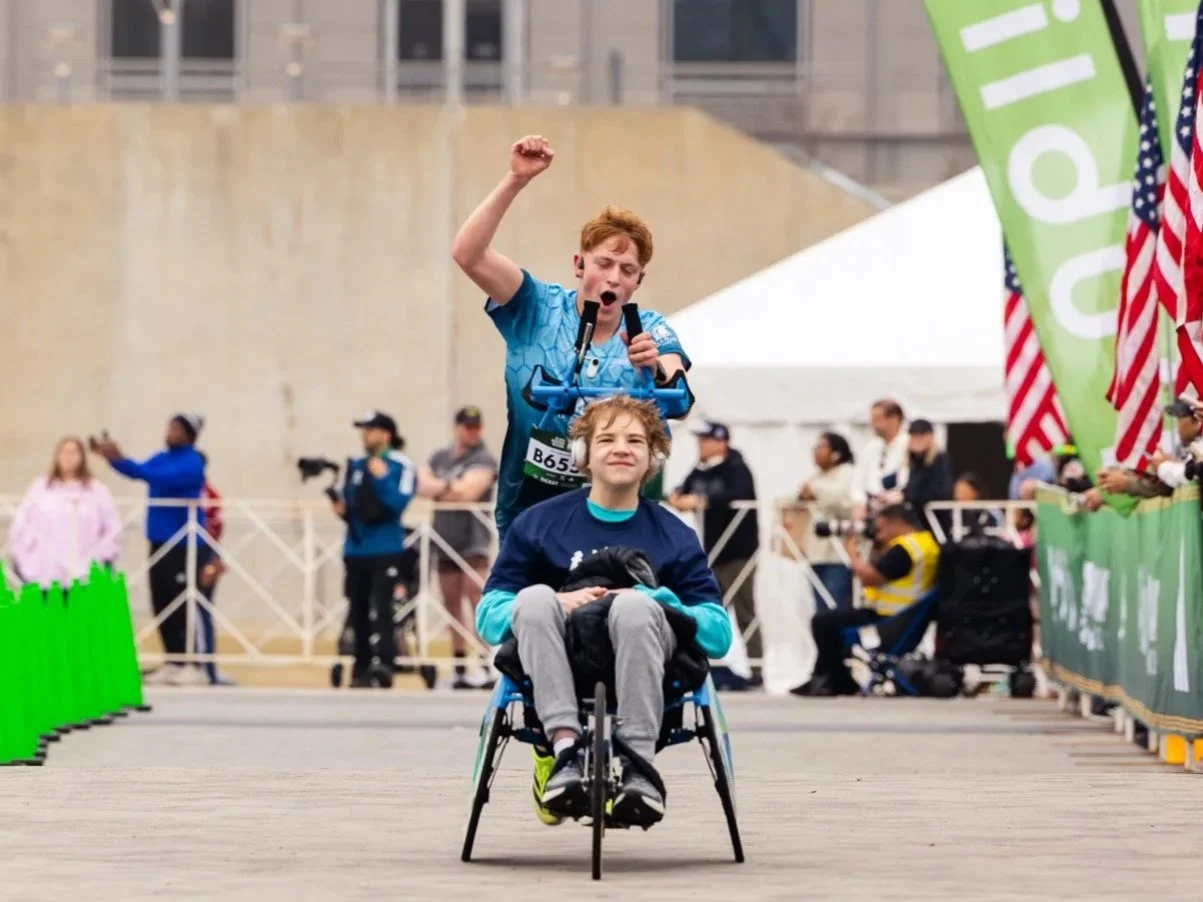
Nate has seen firsthand how participating in a race can positively affect a person’s perspective. Nate invited his friend, Max Kublik, to race with him in The 2026 Atlanta Publix 5k. “Max is an amazing kid. He’s friendly, but shy. During the race, I watched him start conversations with people while I was struggling up hills. I remember asking, ‘Max, how can you be so friendly and so shy at the same time?’ He told me he was really enjoying meeting people and talking to them.”
Nate saw a spark of confidence in Max. That spark grew into a fire as the race went on. Now, Nate gets text messages from Max almost every day as they are making plans to qualify for and run together in The AJC Peachtree Road Race.
One of the biggest lessons Nate learned through volunteering is the importance of empathy and grace. “The athletes motivate me to work harder. They remind me that whatever challenges I’m facing are nothing compared to what some of them deal with every day. That’s something I always keep in mind.”
The young ambassador aims to change perceptions of people with disabilities and establish valuable opportunities for them. “I want this to be an all-sports thing. I know it’s a stretch. But I want the push-assist division to be in the Paralympics.”
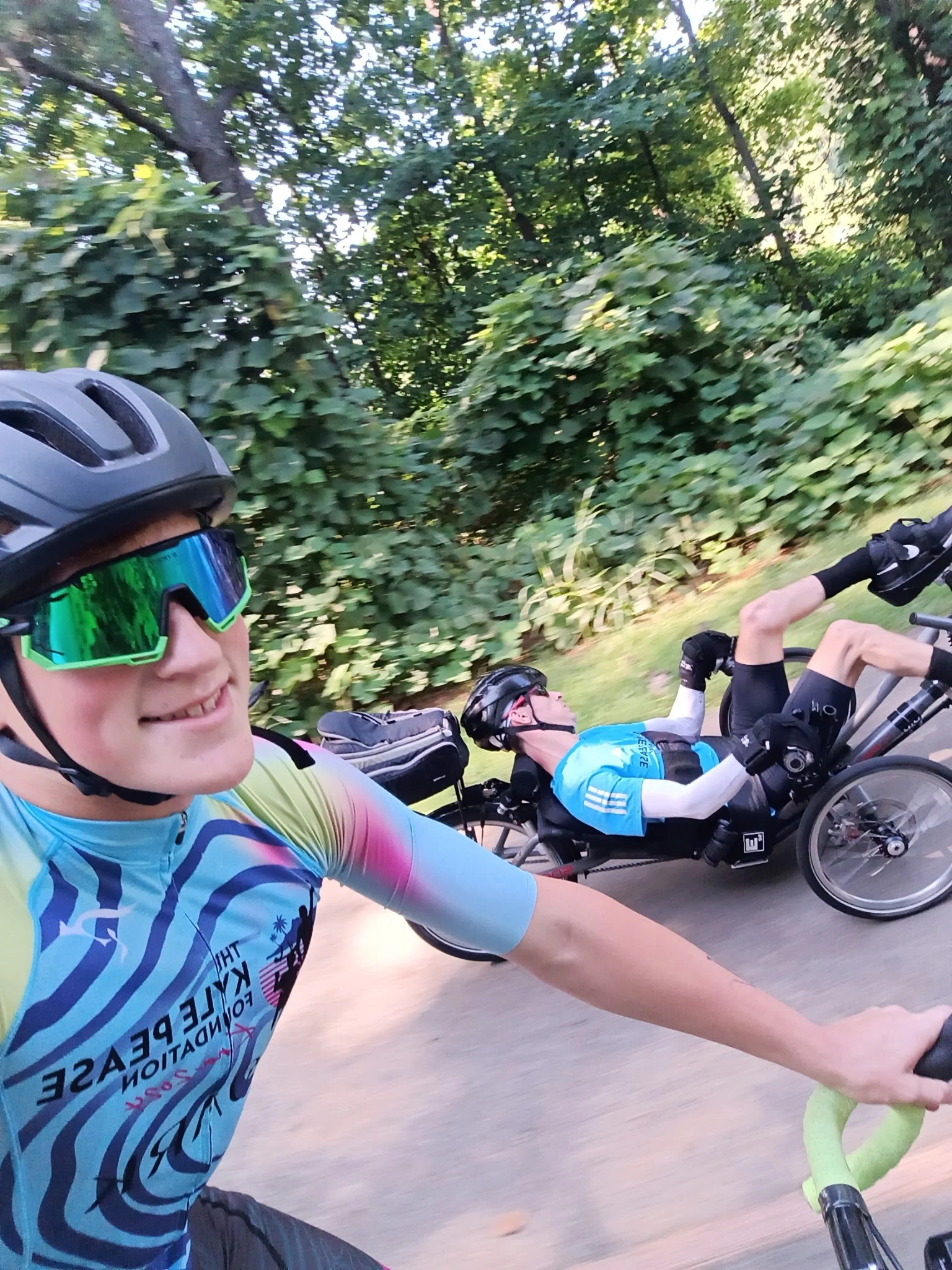
Nate & Kevin on the Silver Comet
I first met Nate at The Silver Comet when my dad and I joined Kyle and Brent on one of their last training rides before they headed off for the IRONMAN World Championship in Kailua-Kona, Hawaii. Besides Kyle and Brent, the whole Kona team was there – Steve Barth, Jason Linscott, and Greg Smith. There was a buzz in the air. Initially, Nate, my dad and I were only planning on riding a portion of the 100 miles. As the day went on, we kept encouraging each other and eventually completed 100 miles.
“I reflect on those memories often.” Nate shared. “Everyone crossing into Alabama together, able-bodied athletes, Kevin and Kyle. We were all included.”
Ultimately, Nate’s KPF journey has taught him that sports are about far more than medals, finish times, or competition. They are about belonging, friendship, and sometimes, they are about discovering that you are capable of far more than you might ever imagine. Nate summed it up, “Challenges are easier to overcome when you’re a part of a team, and some of the best memories come from doing hard things together.”
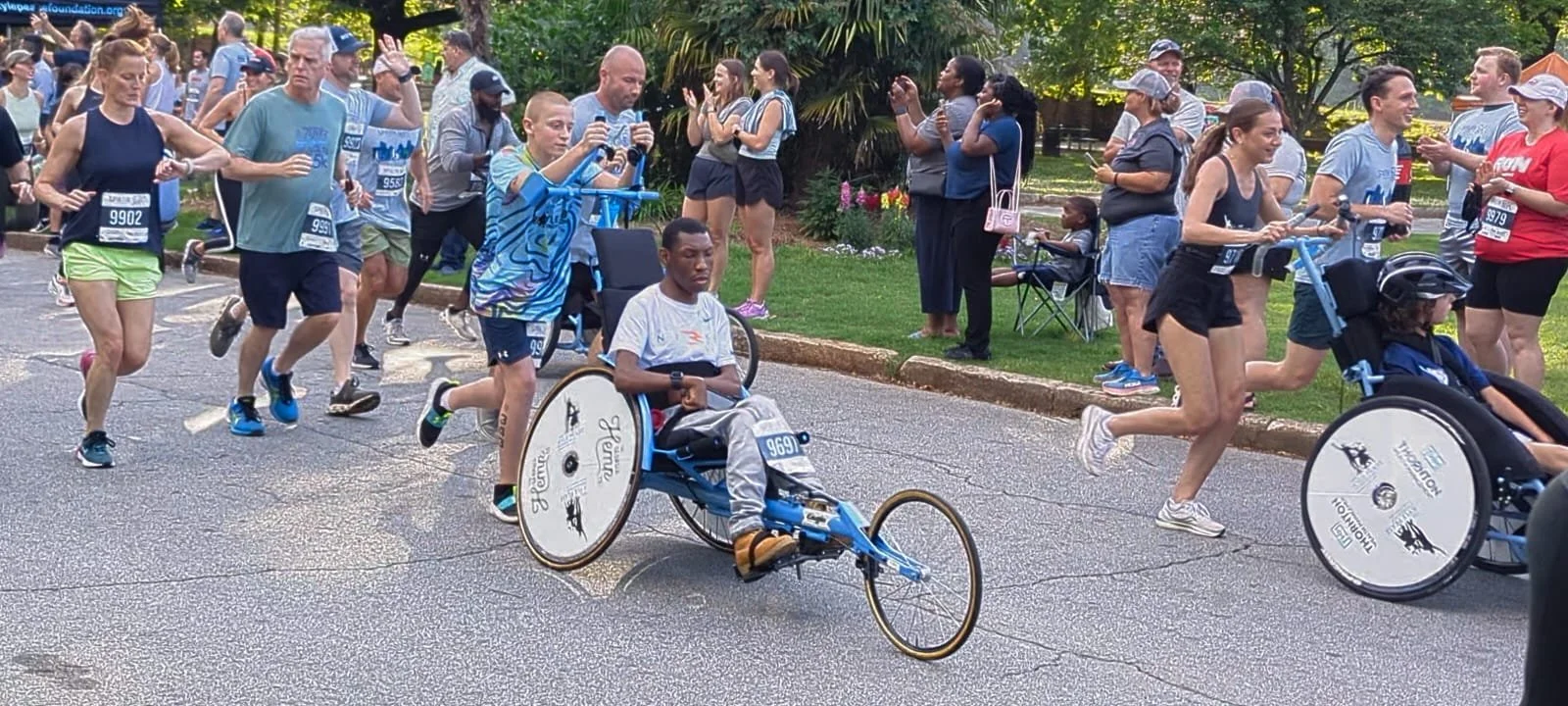
Nate got involved to share his enthusiasm for endurance sports and help support others to cross finish lines. But his belief in teamwork, inclusion, and belonging, along with racing with like-minded people, made him realize that this can extend beyond athletics. It’s about discovering that you are capable of far more than you ever imagined, especially when you have a team alongside you.
Freedom in the Strokes: Inclusivity through Indoor Rowing in Atlanta
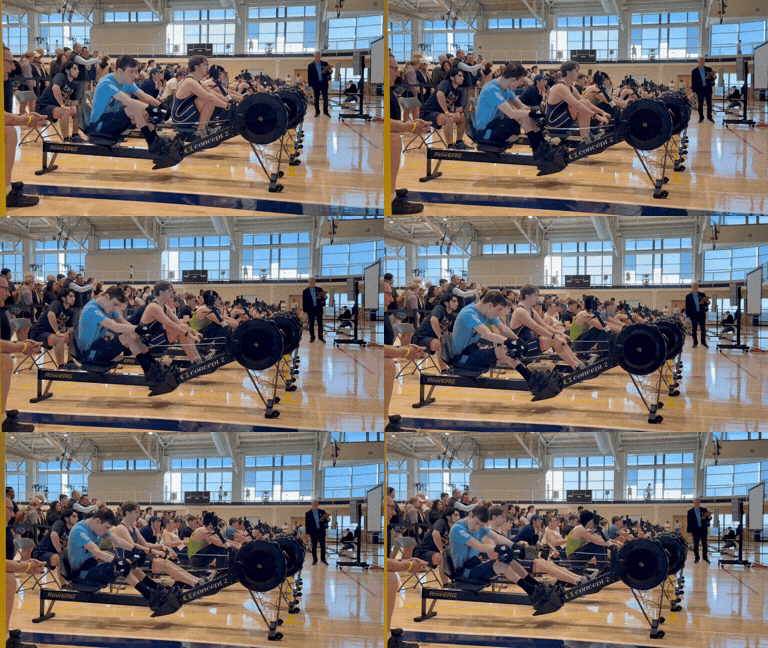
The 2026 Atlanta Erg Sprints was nothing less than pure inspiration. This spectacle of an event is one of the few indoor rowing events in the Southeast that attracts both collegiate and amateur athletes, including athletes with disabilities.
The 2026 Atlanta Erg Sprints was nothing less than pure inspiration. This spectacle of an event is one of the few indoor rowing events in the Southeast that attracts both collegiate and amateur athletes, including athletes with disabilities.
Rowing is a well-known sport around the world. It has bolstered YouTube personalities and social media influencers, like Scottish Rower Cam Buchan and former collegiate rower Shane Farmer (aka Dark Horse) to make a name for themselves. Within a few clicks on YouTube, you could watch Buchan crush a 2k sprint on the erg, then scramble to the nearest trash can and proceed to vomit, totally waxed.
I haven’t gotten to that state yet. But in a 2,000-meter sprint, a feat that initially seems completely doable to those who are not in the know, you give it everything you have to complete the challenge in the fastest time.
Unlike most endurance sports, such as running, rowing is both aerobic and anaerobic, a pulse-pounding dance that can break even though most-gifted athletes. I have seen my heart rate shoot up from 130 to 190 bpm within a few seconds. My dad and I spent months going to town on The Iron Horse, testing our abilities, pushing the limits physically and mentally. It hurts, but the pain tastes sweet in the heat of competition.
Over the past months, I’ve rowed in our bonus room to the rhythm of Shane Farmer’s coaching, matching his strokes per minute, putting perceived power down, fighting the dystonia rattling my core. I have gotten to the point where I am able to stabilize and mitigate my dystonia, laying down more power, pacing at a sub-2:40 per 500 meters.
This, by no means, qualifies me as some big, strong, Para rowing god. These guys are incredible athletes, chiseled, and far better athletes than I could ever dream of becoming. I’m just a writer pretending to be an athlete. Back to Georgia Tech.
Time seemed to contract and expand throughout the day. Echoes of screaming and cheering played a frantic beat against my eardrums. Bodies collapsed onto the gymnasium floor as totally gassed rowers tried catching their breaths amid the static air. If this was a boxing match, it would have been like twenty total knockouts at once. The indelible memory would forever brand the sheer sight of wilted athletes in my mind.
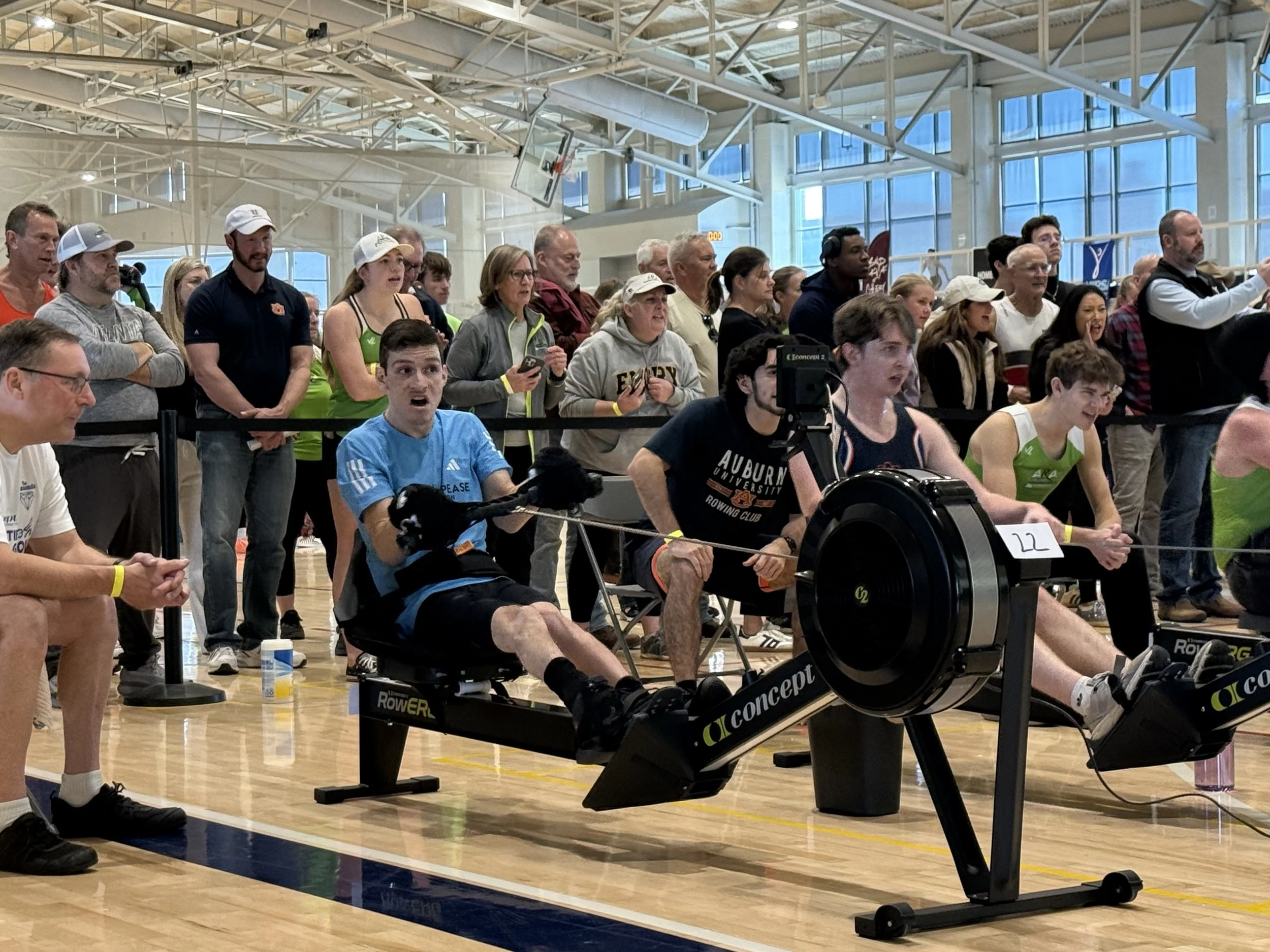
Finally, it was time for my rowing heat. Gloves on. Active Hands slid over them. My dad strapped my hands to the modified grips that slide over the rowing handle. Also, extra straps for my feet. Besides the modified tractor-seat-like chair, these are the most important things that enable me to row. All of that equipment fits into a small wagon we towed through the gym. After a quick warm-up to get the blood flowing, to get my body adjusted to the rhythm of rowing, the other athletes in my heat got on their assigned rowers as I felt a crowd culminate around us.
There were a couple of buddies from my wheelchair football days, settled off to the side in their wheelchairs, looking on. I cannot screw up, I thought. I closed my eyes and took a deep cleansing breath. This is the time when you need to get angry, when you prime your body to go full throttle, when you toe the edge. I opened my eyes. The erg monitor gave the count. You could hear a pin drop against the background silence. My mind was numb. My body was lucid. Instinct held full control over me. Set ready. Attention. Row!
I focused on getting my strokes up, building momentum sustainable for the two thousand meters. I relied heavily on my legs. At 5’9, roughly 120lb, my legs are the strongest components in my drive. Drive the power through your legs, swing your hips, snap that handle at the release, return to the catch! This was the only thing that was going through my head – until I rowed to the midpoint.
Teammates and coaches sitting behind the rowers screamed and cheered intensely as flywheels revved at various paces. I concentrated on the numbers on my monitor. 2:40, 2:34, 2:30, 2:25… My pace was fluctuating. I suddenly realized I was rowing by feel instead of planned pace.
Drive, drive, drive! Immediately, I was in a flop sweat. My gloves were soaked. And, I was rowing by feel instead of numbers. A thousand meters to go, and I started kicking into overdrive. This is where it gets dark.
As my body continued to dance with the machine under me, x-rated thoughts began bubbling to the surface. I thought about the lyrics of “Shadow of the Sun” by Audioslave. As my muscles screamed for relief, I pushed through, concentrating on the heavy metal song.
I treat every event as if it were my last. I forget that I have cerebral palsy and dystonia, almost as if the overwhelming pain erases it. I like that about endurance events. I am free from my disability, free from any impediments, free from any negative thoughts that weigh on my mind.
I reached the final 300 meters and just gave it everything I had. So close to breaking ten minutes, I pushed through the burn in my legs, and tried to make the about-faces at the catch and release quicker. The meters ran down faster. The time, indifferent, steadily ticked. 150 meters. Light it up, I urged myself. The air seemed unbreathable at this point.
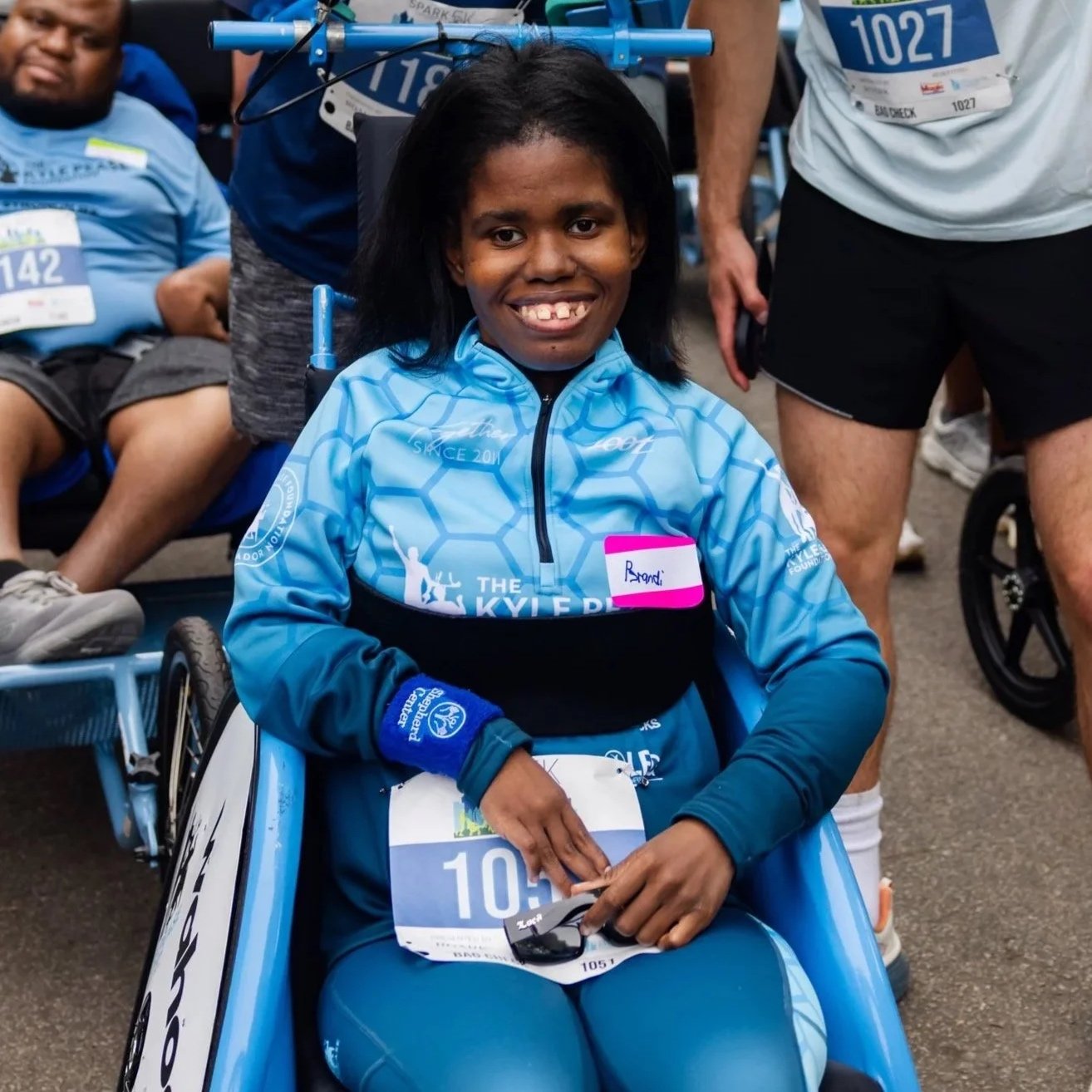
Rewriting the Story: How Brandi Thomas is Turning Struggle into Strength
Brandi’s journey into endurance racing didn’t begin with certainty. It began with curiosity. “Exciting, hard, challenging,” is how she describes it…Taken together, her story points to a consistent truth: change doesn’t come from perfect conditions. It comes from consistent decisions. Not dramatic overhauls. Not flawless execution. But small, deliberate steps taken in the presence of uncertainty.
There’s a moment most people don’t talk about. It doesn’t look dramatic from the outside. No visible breaking point. No clear before-and-after. Just a quiet hesitation, standing at the edge of a decision you know matters more than you want it to.
You tell yourself that you need more time. More clarity. More confidence. But underneath all of that, there’s a harder truth: you already know what moving forward will require. And you’re not sure you’re ready to become the person who can do it. That moment, uncomfortable, uncertain, easy to walk away from, is where everything begins. It’s also the space Brandi Thomas understands deeply. Not through abstract ideas, but through lived experience. The kind that doesn’t remove difficulty but makes it possible to move through it.
“I’ve faced a lot of obstacles in my life,” she says. At 27 years old, Brandi lives in a host home and navigates life with cerebral palsy and asthma, conditions that make running independently impossible. She also has a shunt, meaning even a fall carries a serious risk. These aren’t minor challenges. They are obstacles that change what she can do in the world, what she can do alone, and how she approaches everyday activities. Yet, none of them have defined her limits.
Brandi’s journey into endurance racing didn’t begin with certainty. It began with curiosity. “Exciting, hard, challenging,” is how she describes it.
She was first introduced to adaptive sports, pursuing wheelchair soccer and other sports, where she connected with James Seidel, who encouraged her to take the next step. That step led her to The Kyle Pease Foundation.
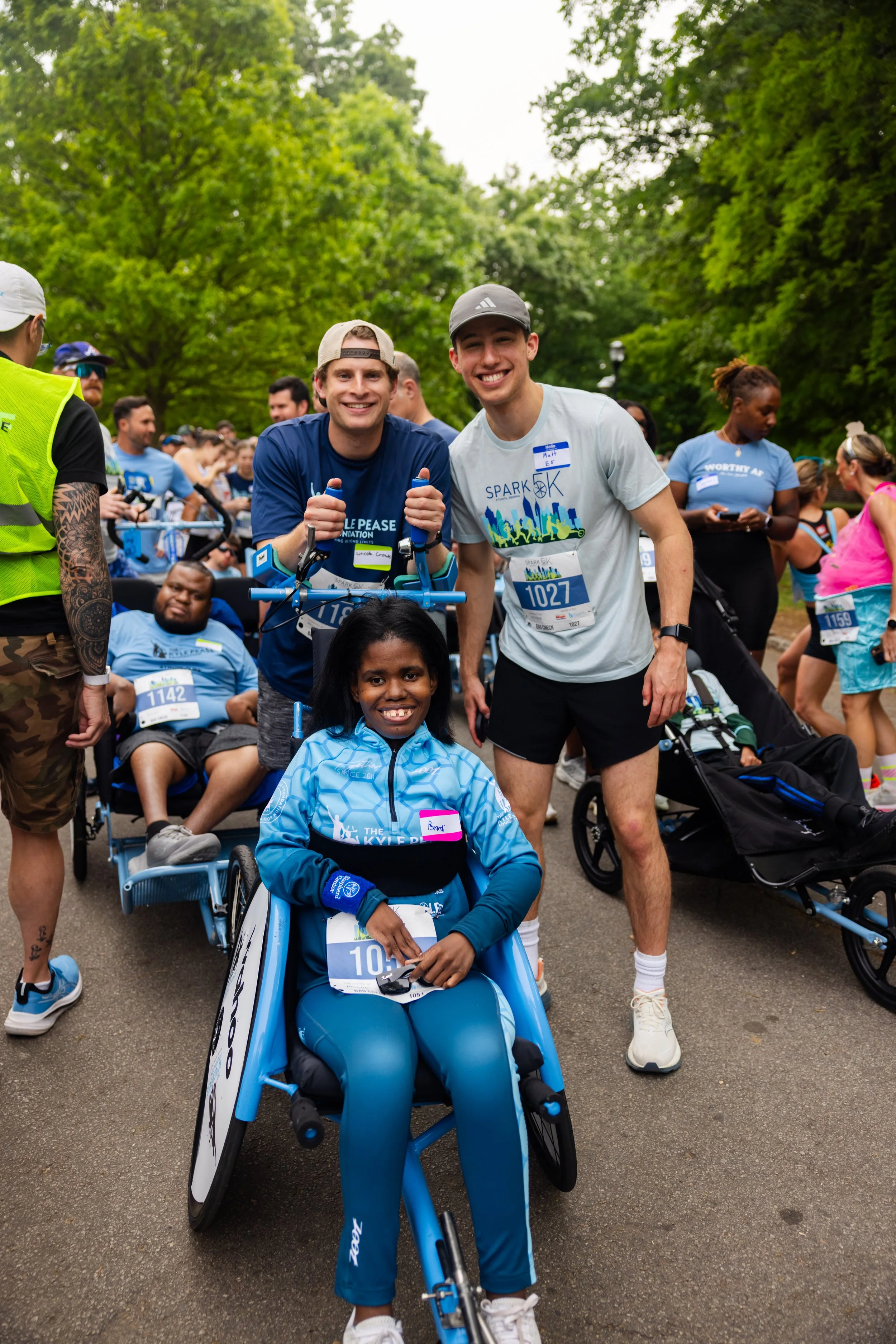
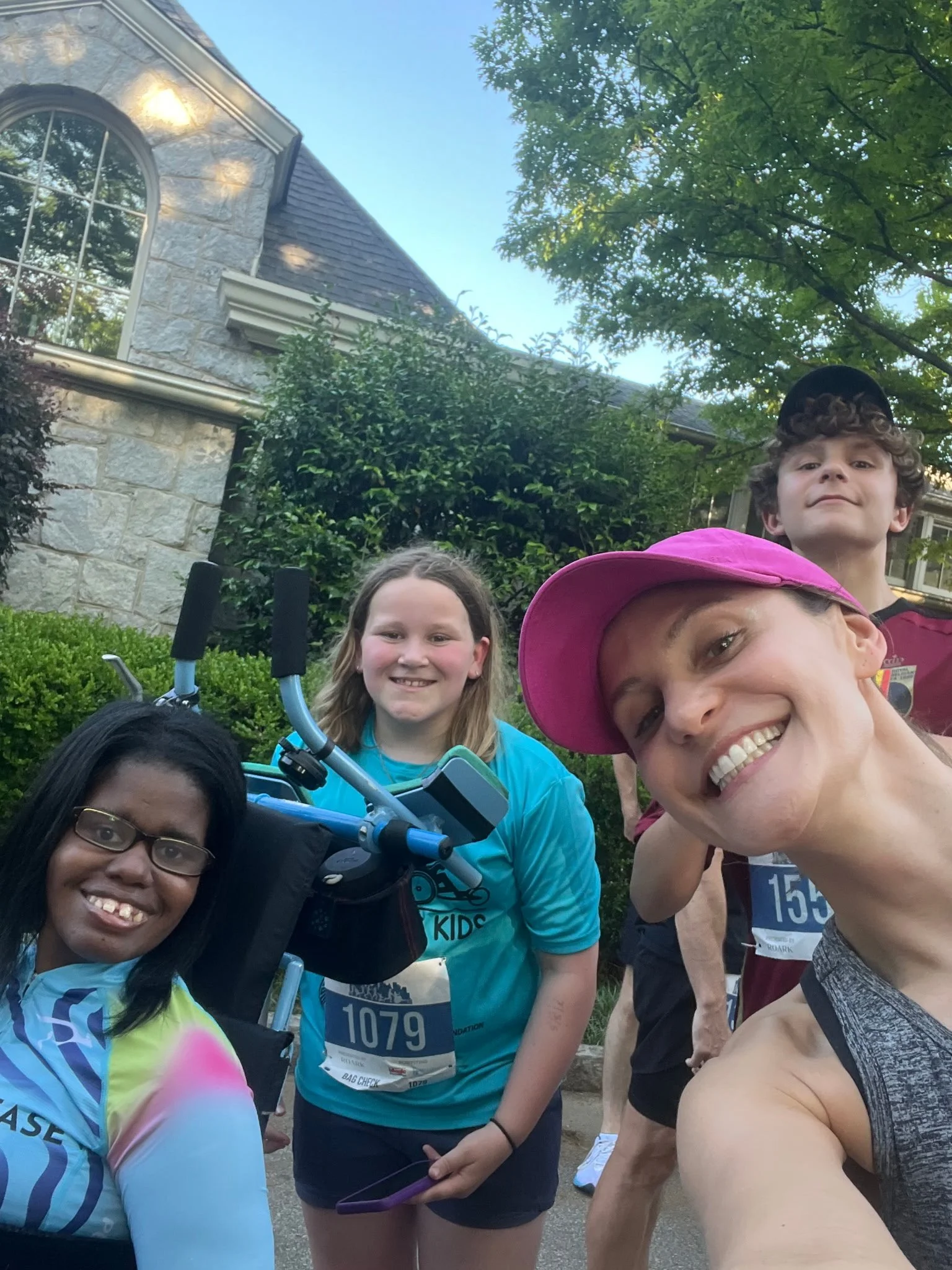
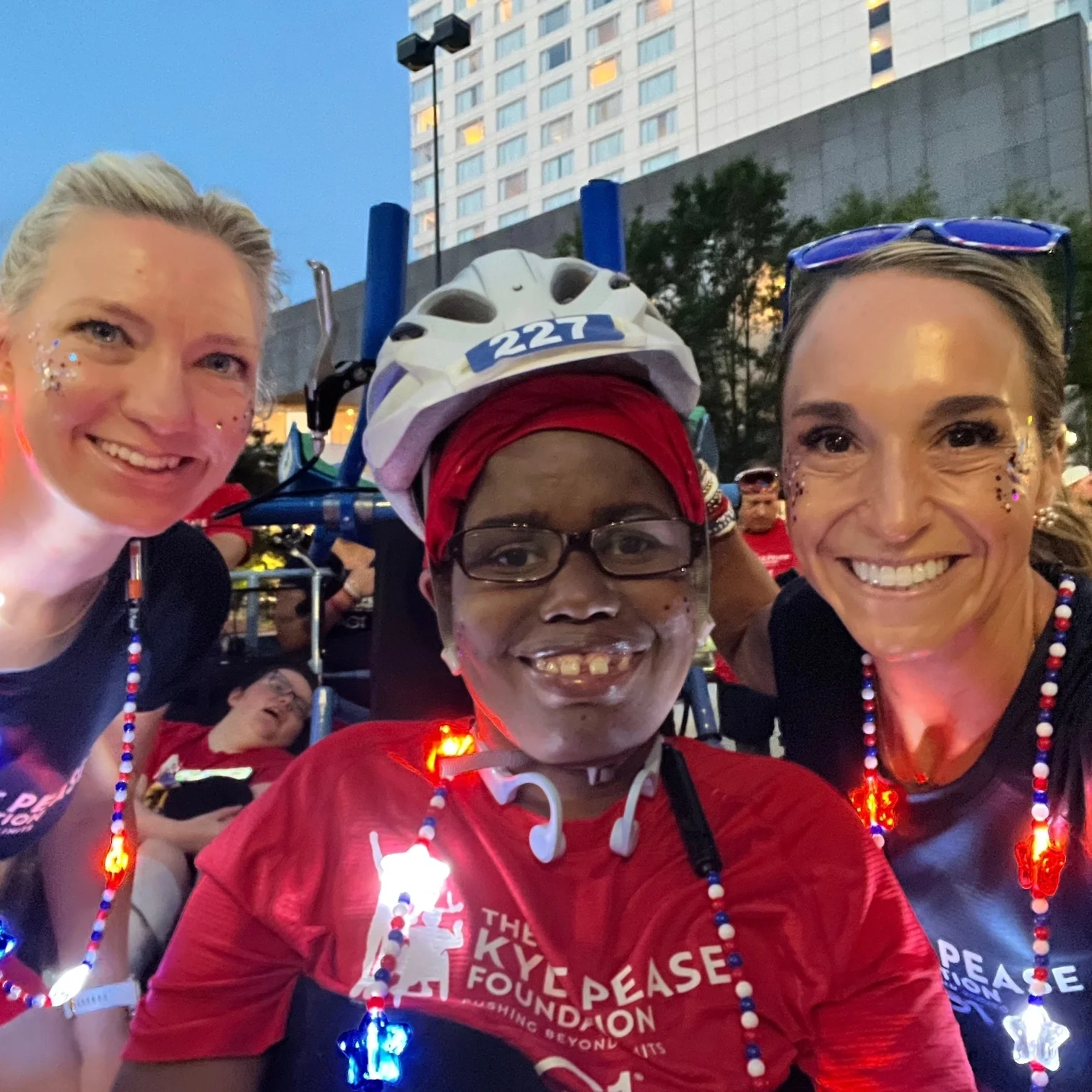
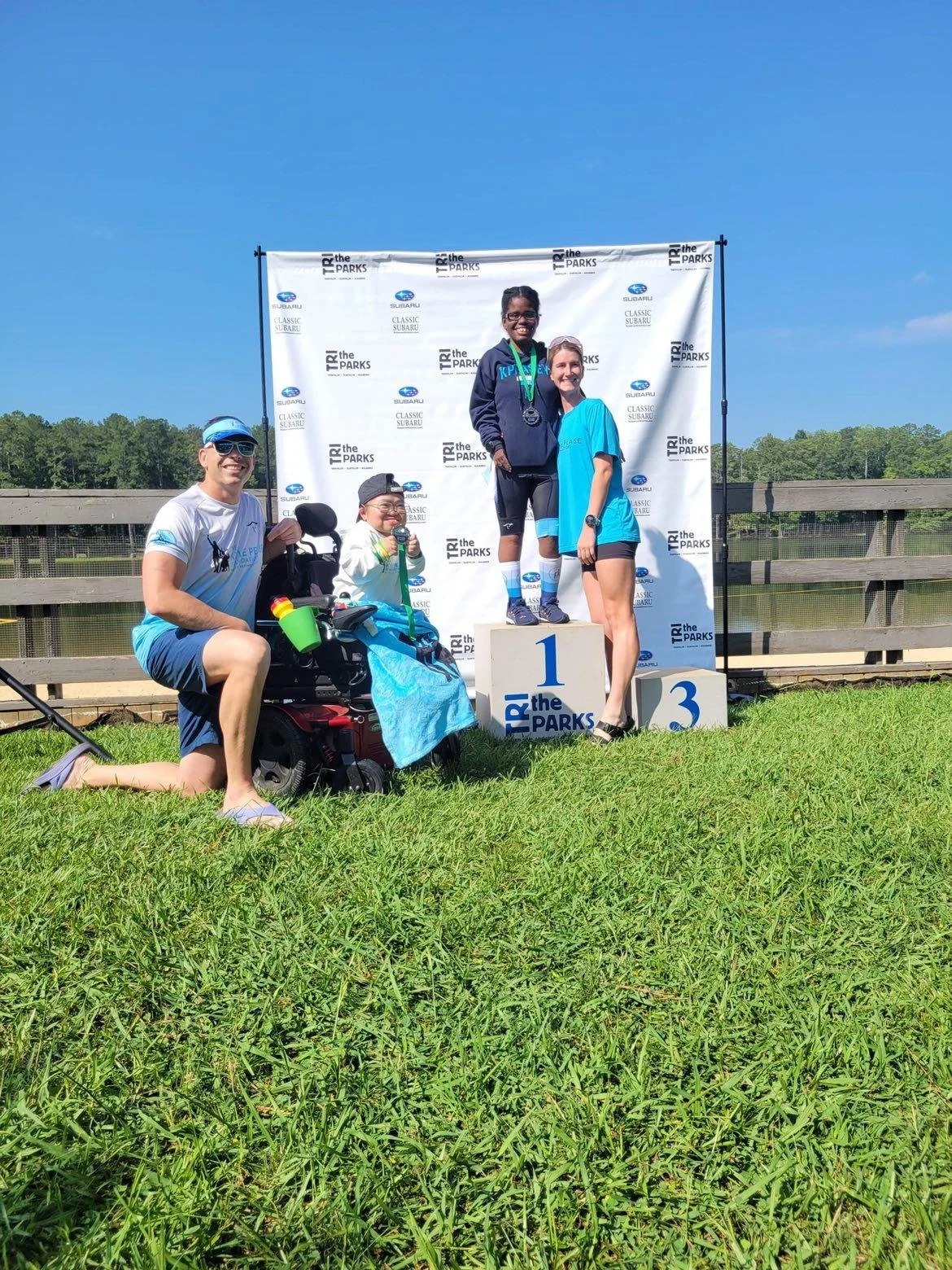
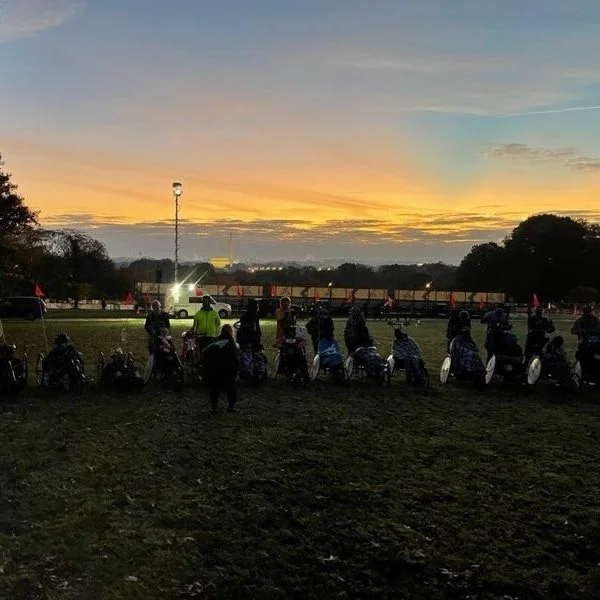
“When I first met the foundation,” she recalls, “I didn’t know what I was getting into.”
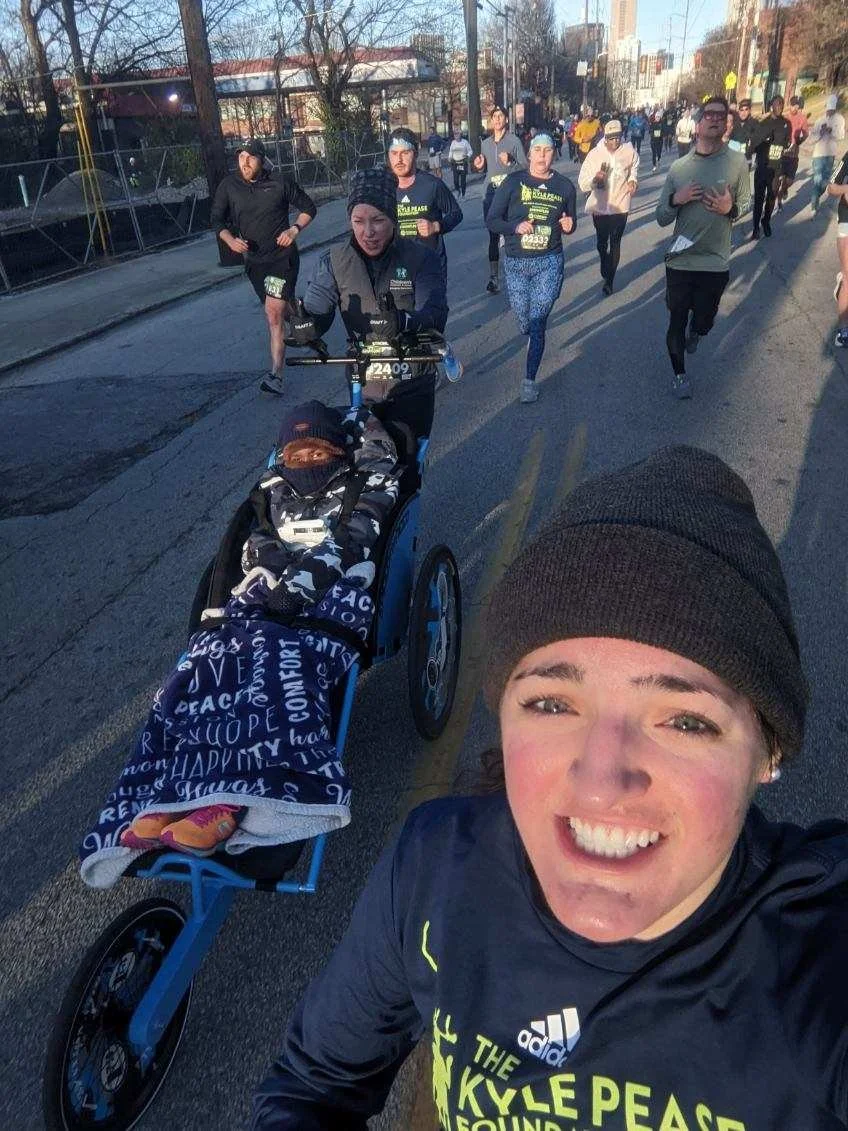
What followed was her first race: the Invesco QQQ Thanksgiving Half Marathon with the Atlanta Track Club. It was there she met push-assist athlete Megan Degan. Their connection was immediate and lasting. But the path forward wasn’t linear.
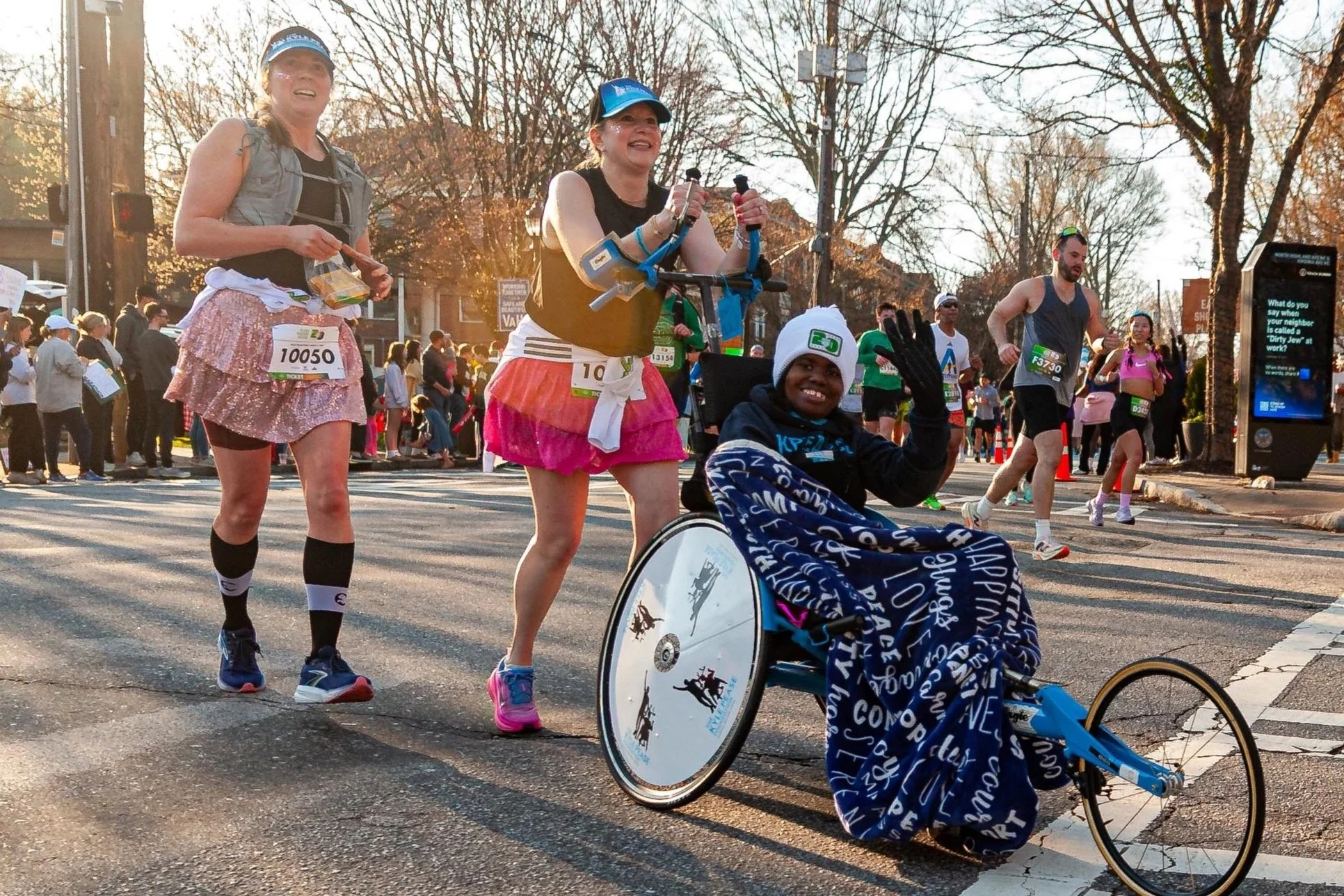
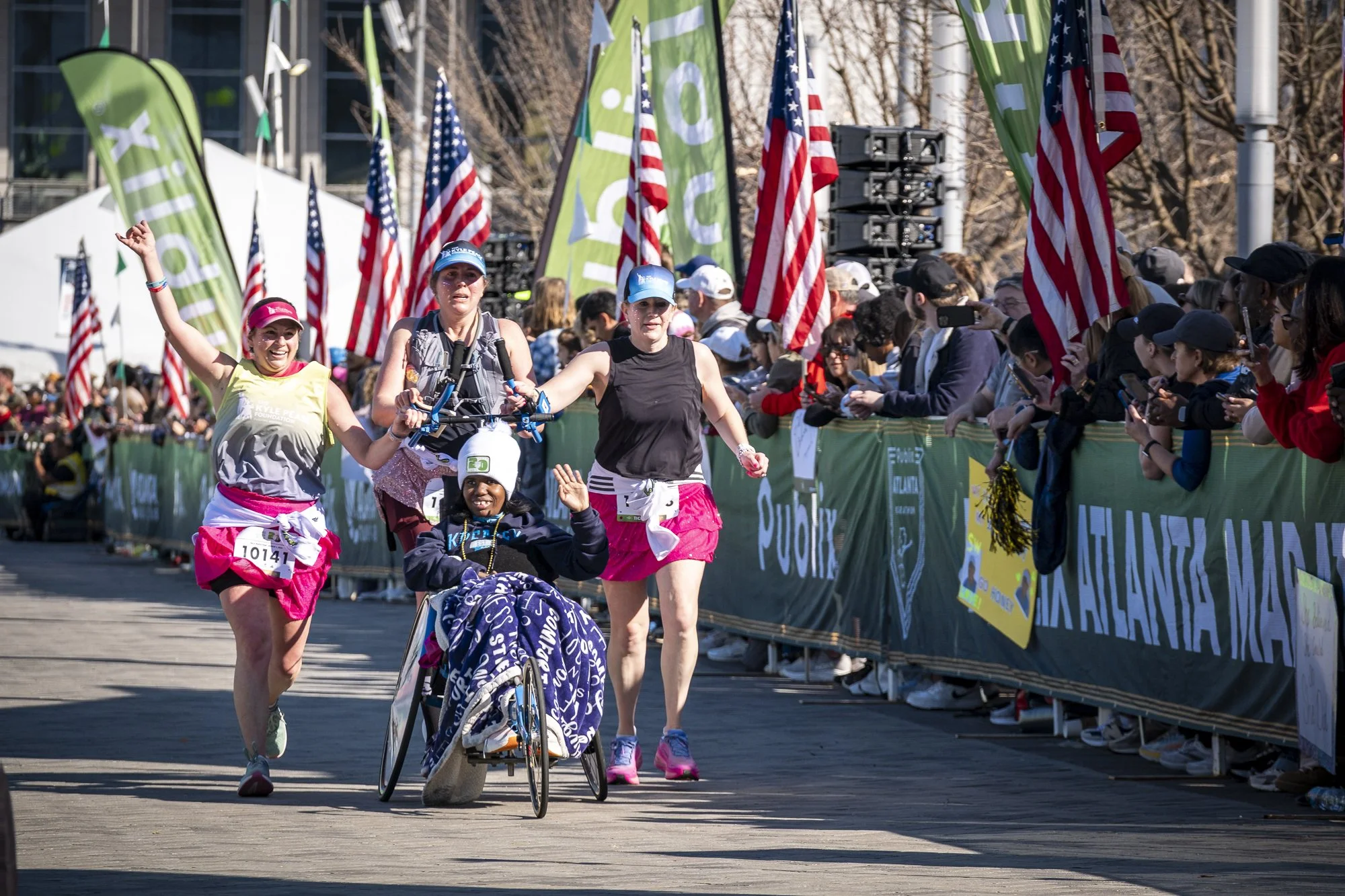
In July 2019, Brandi underwent brain surgery. For many, that would mark a stopping point. A reason to step back, reassess, or redefine limits. For Brandi, it became something else entirely. Her return to racing came just months later, at the same Thanksgiving half-marathon. It wasn’t just another race. It was a comeback. When she reached the finish line, something shifted. A shift powerful enough to make a bold decision.
“I jumped out of my chair and ran across,” she said.
That moment, though simple and trivial on the surface, carried the weight of everything Brandi had endured behind it: recovery, uncertainty, and risk. It wasn’t just about finishing. It was about reclaiming movement, identity, and belief. That’s what courage looks like.
She lives that out daily. Independence, for Brandi, isn’t theoretical. It’s a goal she is actively building toward. She’s preparing to start online school in film production. She wants to travel. To live on her own. Eventually, to move to California. She’s also looking into getting a canine assistance dog to help her navigate daily life, especially since she cannot drive.
“I want to be able to get out and do things on my own,” she says. That desire for independence is also what makes receiving the Bethany Rutledge Courage Award so significant. When she found out she had been selected, her reaction was immediate—and genuine.
“I was speechless. I didn’t know what to say. It was shocking… but a good surprise.”
The award will allow her to purchase a hand-crank bike—something that represents far more than equipment. “It will help me train more and go on my own time,” she explains. “I can do bigger races instead of repeating the same ones.”
Access to specialized equipment is one of the biggest barriers adaptive athletes face. Funding is limited, and knowing where to find support often depends on connections.
This changes that. With a hand-crank bike tailored to her, Brandi is already thinking ahead: The Boston Marathon, a Half Ironman, even Kona. Not as distant dreams, but as tangible next steps. She’s already completed major races, including a marathon at Walt Disney World. But long-distance racing comes with its own physical challenges.
“In the chair, long races make me stiff,” she explains. “Especially when it’s cold—it’s hard to get out.”
The new equipment isn’t just about performance. It’s about sustainability, comfort, and expanding what’s possible. It’s about ownership.
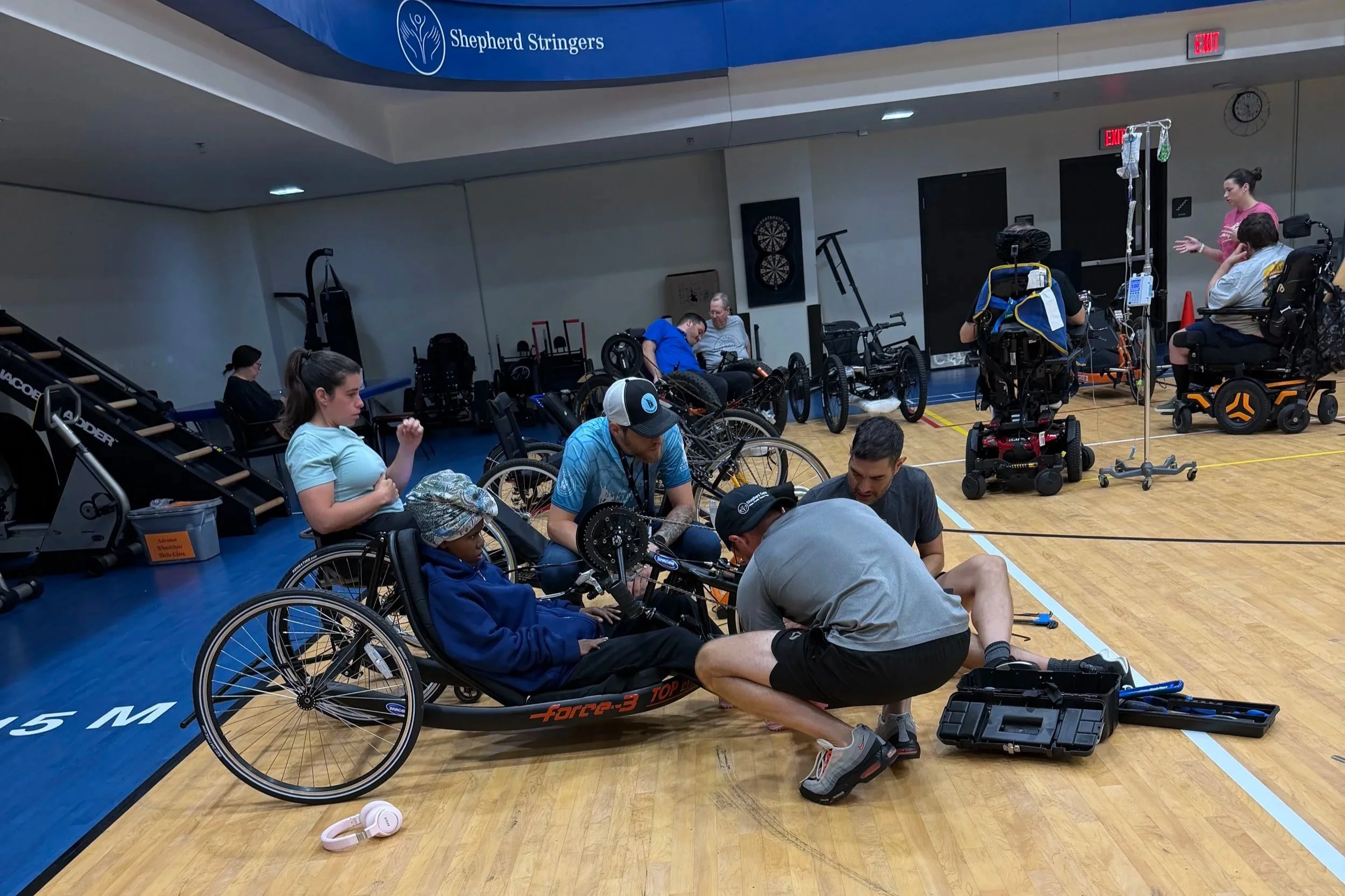
Brandi getting fitted for a bike at Shepherd Center.
For Brandi, that ownership shows up in decisions—daily, often difficult ones. It’s not about controlling every outcome, but about choosing how she responds, how she moves forward, and how she defines herself.
Taken together, her story points to a consistent truth: change doesn’t come from perfect conditions. It comes from consistent decisions. Not dramatic overhauls. Not flawless execution. But small, deliberate steps taken in the presence of uncertainty.
That step might look different for everyone. For Brandi, it looked like signing up for a race she didn’t fully understand. Coming back after brain surgery. Trusting a team. Pushing through discomfort. Choosing independence, even when it’s difficult.
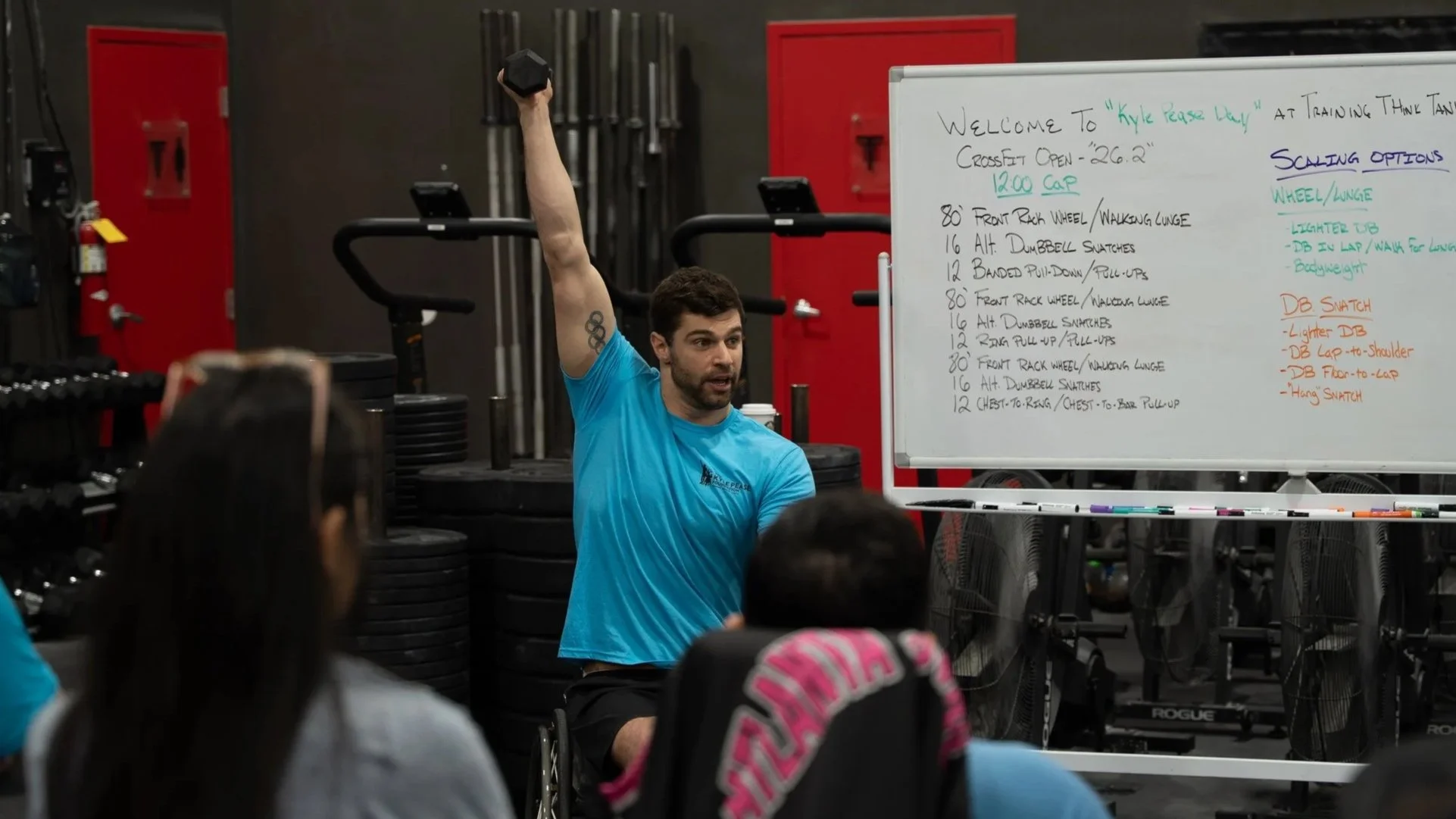
Tom Miazga: Redefining Limits Through Relentless Enthusiasm
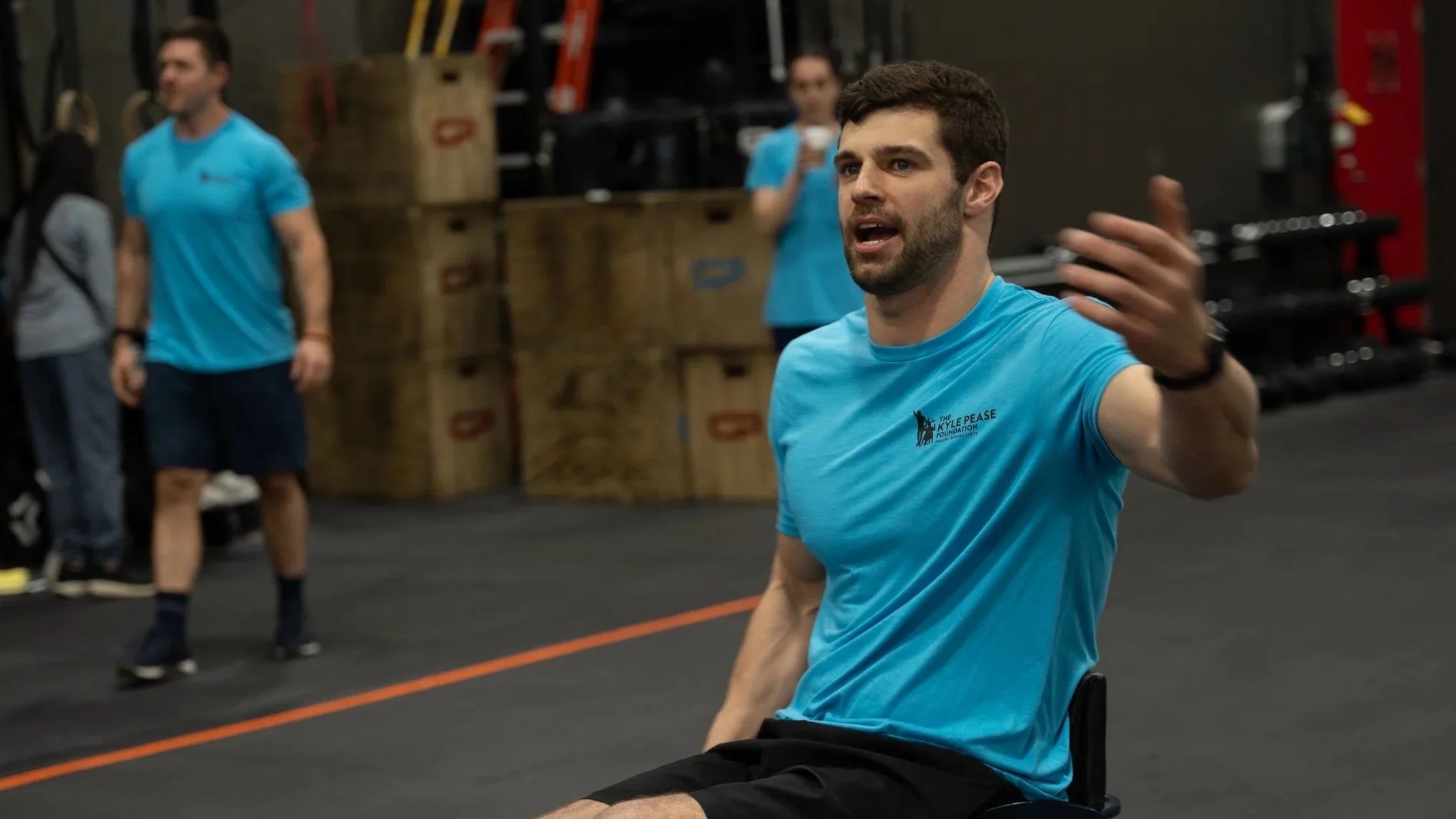
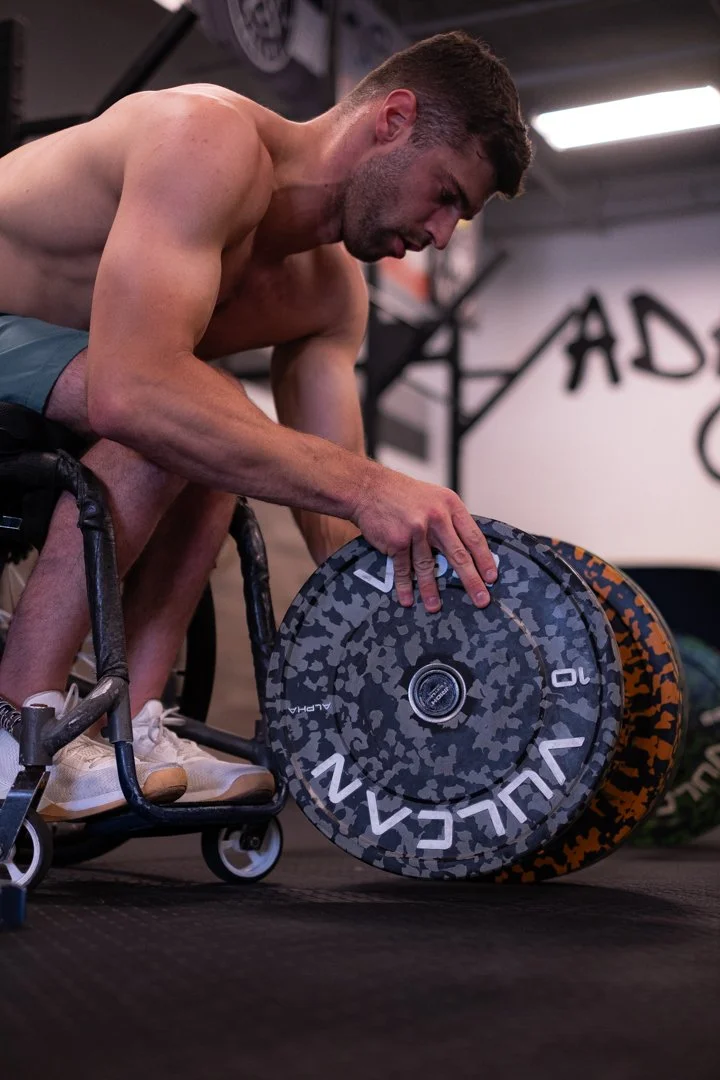
Tom Miazga doesn’t describe his life in terms of limitations. He describes it in terms of momentum. At 35, the Milwaukee native is a full-time athlete and coach, a Paralympic swimmer turned elite CrossFit competitor, and a nine-time “Fittest Seated Man on Earth.” If things go according to plan, he’ll make it ten. But numbers, while impressive, only tell part of the story. What defines Tom isn’t just what he’s achieved. It’s how he’s chosen to interpret the obstacles that shaped him.
Tom Miazga doesn’t describe his life in terms of limitations. He describes it in terms of momentum. At 35, the Milwaukee native is a full-time athlete and coach, a Paralympic swimmer turned elite CrossFit competitor, and a nine-time “Fittest Seated Man on Earth.” If things go according to plan, he’ll make it ten. But numbers, while impressive, only tell part of the story. What defines Tom isn’t just what he’s achieved. It’s how he’s chosen to interpret the obstacles that shaped him. “I keep thinking of the idea of resilience,” he says, pausing before correcting himself. “But I think the bigger thing is enthusiasm.” That distinction matters. Resilience implies endurance. Enthusiasm implies intention. Tom’s life has always required both. He shared this with athletes from The Kyle Pease Foundation at Training Think Tank, a CrossFit gym in Roswell, Georgia.
Tom grew up just north of Milwaukee, in a neighborhood that, by his own account, gave him everything he needed—support, competition, and a reason to push beyond what others expected of him. Born with cerebral palsy, he faced mobility challenges from an early age. Walking wasn’t intuitive. Movement wasn’t automatic. Things most people never think about, like stepping onto a curb or climbing stairs, required effort, focus, and often frustration. But in his backyard, none of that translated into exclusion.
With three older siblings, Tom was constantly in motion. Baseball, football, climbing, running, whatever the game was, they made space for him. Not by lowering the bar, but by inviting him to reach for it. “They helped me,” he says, “but they also pushed me. They let me try things that maybe I didn’t feel comfortable doing.”
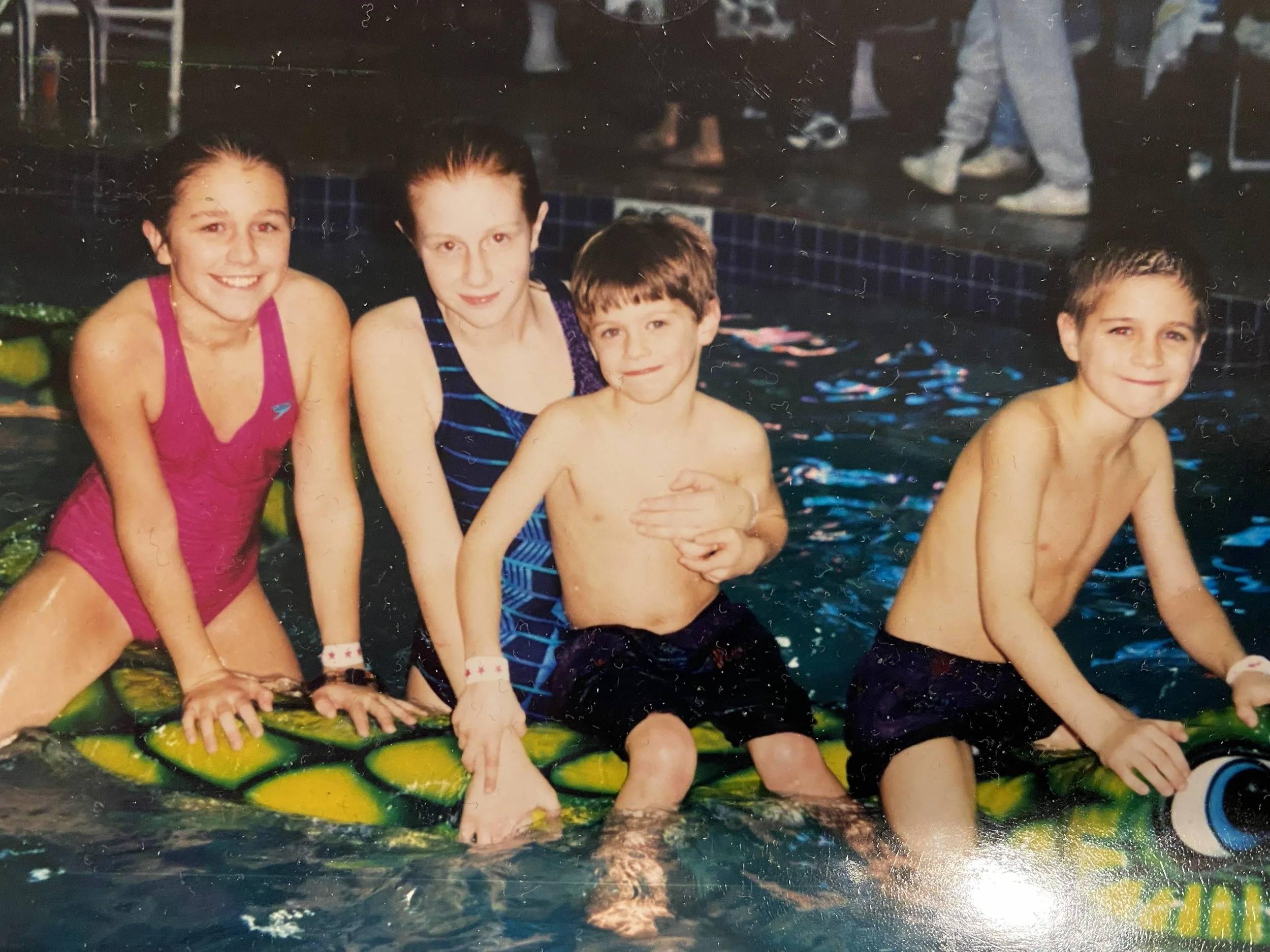
That dynamic became foundational. Because Tom didn’t grow up in a system built for adaptive athletics. There weren’t structured opportunities waiting for him. He had to invent his own ways to participate, to compete, to belong. So, he did.
By second grade, the questions started. Why is he in a wheelchair? Why does he walk like that? Why is he different? They weren’t malicious questions. Just honest ones from kids beginning to notice differences. But they forced Tom into an early awareness of how he was perceived. “It put me in a mindset where I felt like I had to prove myself,” he explains.
Not to prove that he was better, but to prove that he was more than his disability. More than the wheelchair. More than what people assumed when they saw him before they knew him. Fortunately, he wasn’t doing it alone. His family, teachers, and close friends created a support system that reinforced a critical idea early: his identity wasn’t defined by his disability. That clarity didn’t eliminate the struggle, but it gave him direction. Tom speaks openly about something many athletes, especially adaptive athletes overcoming adversity, don’t always articulate: the emotional toll. “I had to mature very quickly,” he says.
That maturity came from constantly navigating a world that didn’t operate at Tom’s pace. His body didn’t always respond the way he wanted it to. Some days, basic movement felt like a negotiation between mind and muscle that he couldn’t fully control. “It’s hard to explain to someone what it feels like when your brain just won’t let your body do something,” he says.
That disconnect created frustration. And over time, that frustration evolved into something more structured. Perfectionism. He pushed himself relentlessly. Held himself to standards that often exceeded reason. Demanded progress, even when progress wasn’t linear. That mindset helped him achieve extraordinary things. But it also came with a cost.
“When things don’t go well, everything feels wrong,” he admits. So, he learned to find release. That release came in the form of swimming.
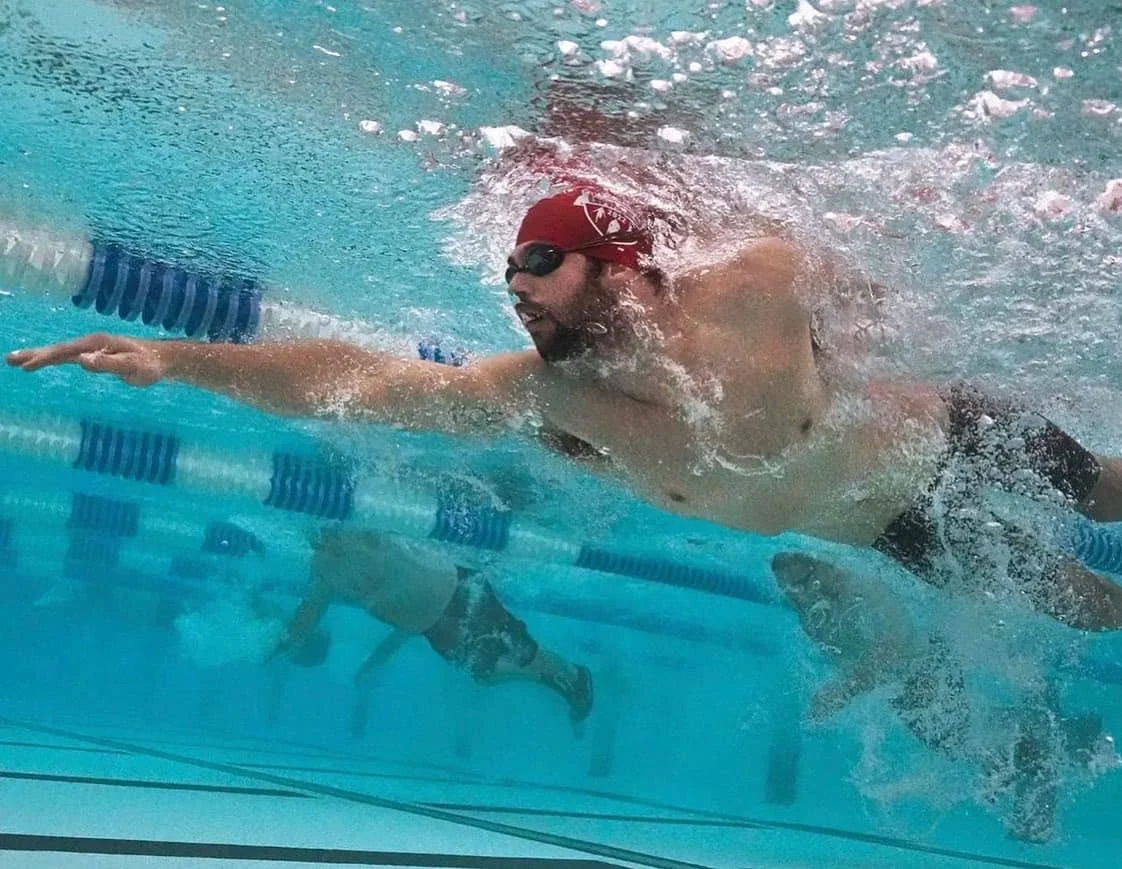
Swimming wasn’t just a sport for Tom. It was a recalibration. The moment he entered the water, something shifted. The resistance of gravity softened. Movement became smoother, more intuitive. His body responded differently. His cerebral palsy was no longer a hurdle. In the water, Tom could build his muscles, endurance, and confidence. “The water made me feel like I could do more,” he says. “It was almost like a superpower.”
But the physical benefits were only part of it. There was also silence. A kind of mental stillness that stripped away comparison, expectation, and noise. In the water, it was just him, his thoughts, his rhythm, his effort.
That space became essential. It gave him control in a life where control wasn’t always guaranteed. And over time, it became the foundation for something much bigger.
Tom swam competitively for 15 years, progressing through national, collegiate, and international levels. His career peaked at the 2008 Beijing Paralympic Games, where he competed among the world’s best. Across his swimming career, he set 13 international records and eight American records. Those achievements did not happen by chance. They were the result of years of disciplined effort, internal conflict, and a refusal to accept imposed limits. But eventually, like all athletes, he reached a crossroads. For most, retirement from swimming is an endpoint. For Tom, it wasn’t.
“I realized I wasn’t done competing,” he says.
When Tom retired from swimming, he became a fourth-grade teacher and had been looking for something to help him stay in shape so that he could keep up with his students. That led him to CrossFit, a completely different environment, with new challenges, new systems, and new ways to measure performance. Where swimming had provided fluidity and isolation, CrossFit demanded explosiveness, adaptability, and constant variation. Tom embraced it. But it was the community that drew him in. He felt part of the mantra, “Everybody and every body”.
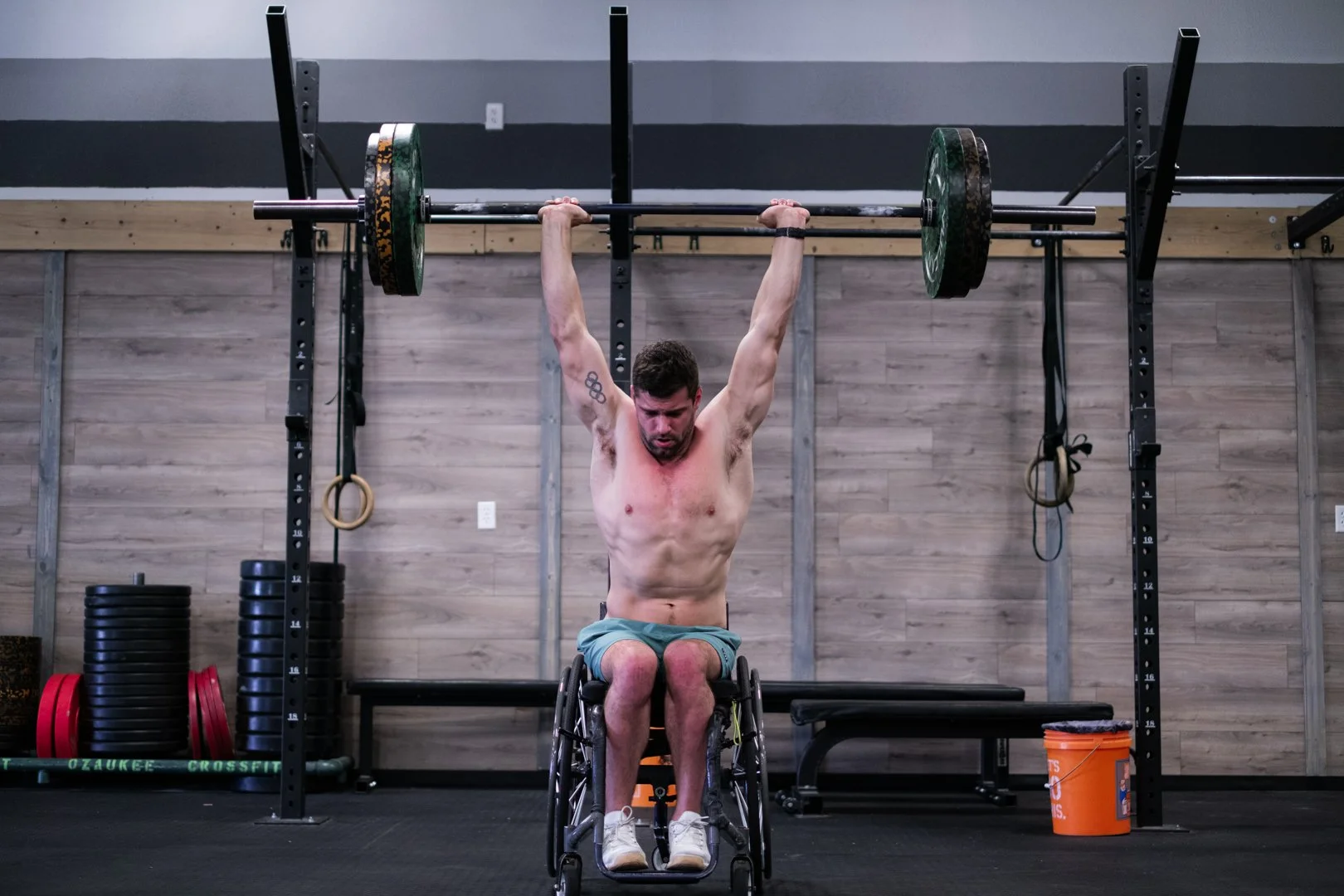
He became the “Fittest Seated Man on Earth.” Then he did it again. And again. Nine times in total. Now, he’s aiming for ten.
What’s remarkable isn’t just Tom’s determination, but his positive, encouraging attitude. Because even after reaching the top, Tom still operates from the same internal drive he developed as a kid: prove what’s possible.
“Nothing worth fighting for comes easy,” Tom says.
There’s a story Tom remembers vividly from childhood—one that still shapes his perspective of himself today. In fifth grade, he slipped stepping onto the starting blocks at a swim meet. Kids laughed. Not cruelly—just instinctively. But what stayed with him wasn’t their reaction. It was his own.
“I was mad at myself,” he says. Not embarrassed. Not ashamed. Angry. Because in his mind, he had failed to meet the standard he set for himself. The standard of proving he belonged. Looking back, he recognizes how harsh that response was.
“If I could talk to 10-year-old me,” he says, “I’d tell him to slow down. You’re okay. Don’t be so hard on yourself.” That perspective didn’t come easily. It came through years of experience, reflection, and learning how to balance ambition with self-compassion.
Ask Tom what he wants people to take away from his story, and he doesn’t talk about medals or titles. He talks about perspective. He talks about effort. And most importantly, he talks about enthusiasm. Not blind optimism. Not forced positivity. But a deliberate choice to engage fully with what’s in front of you, even when it’s difficult, even when it’s unfair, even when it doesn’t make sense. “I can’t control what my body does every day,” he says. “But I can control how I approach it.”
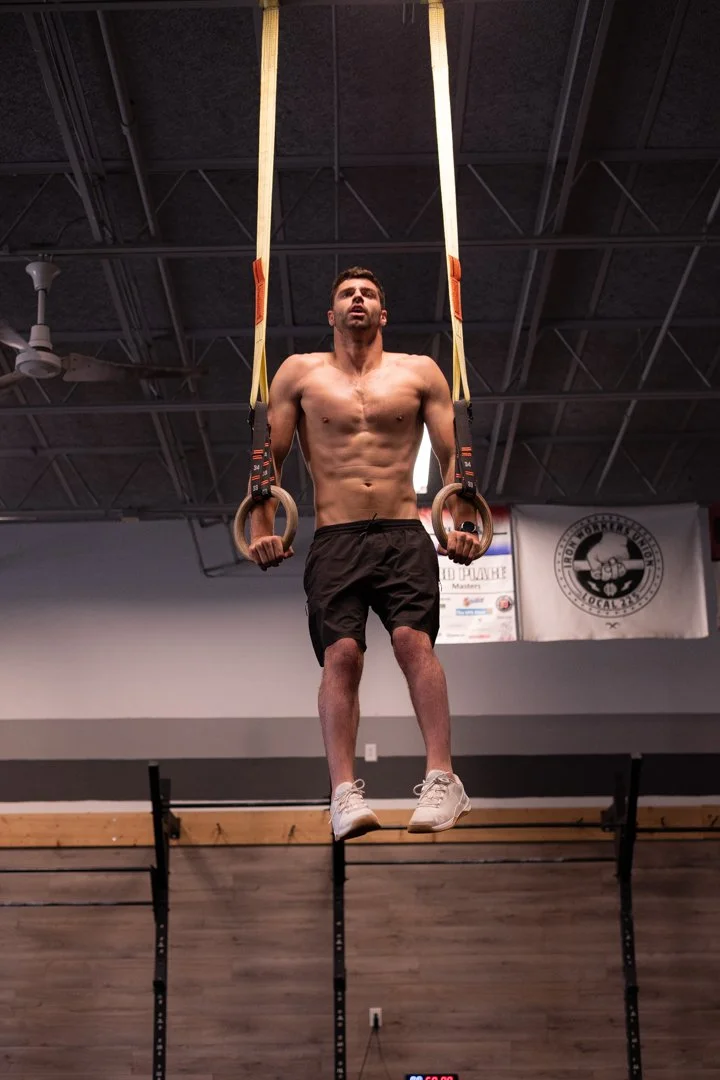
That mindset has allowed him to build a life that isn’t defined by limitations, but by an expansion of potential, of identity, of what others believe is possible.
For all he’s accomplished, Tom doesn’t speak like someone who’s finished. There’s still more to prove. More to explore. More to achieve. Not because he needs validation but because he’s still curious about where his limits actually are. And maybe that’s the most important part of his story.
Ella: Everyone, Live Life Abundantly
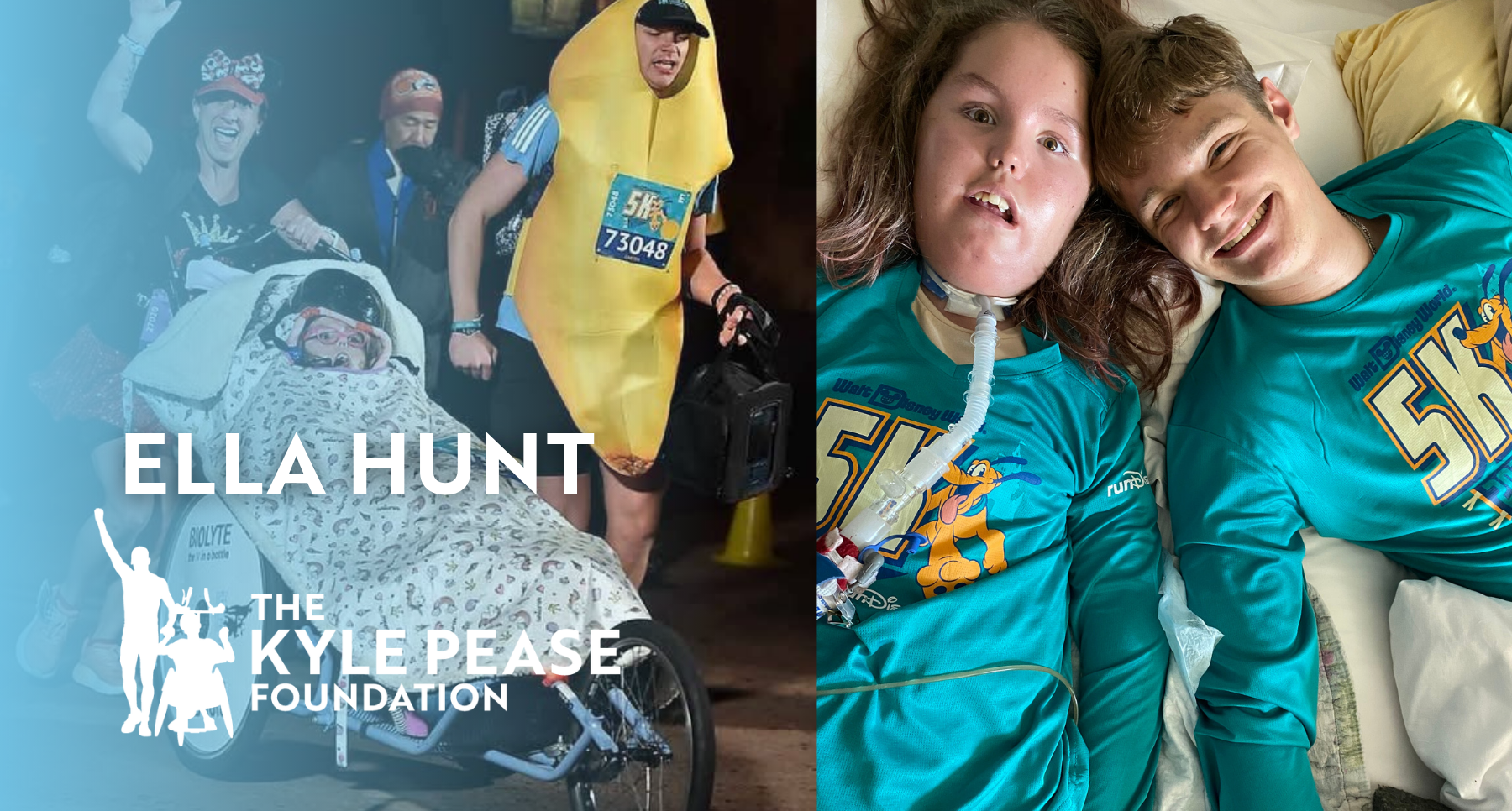
When Ella Hunt talks about racing, her face lights up long before she mentions the finish line. Despite having Spinal Muscular Atrophy, a genetic neuromuscular disease that causes progressive muscle weakness which affects movement and breathing, Ella’s disability does not define her. Instead of the word impossible, she goes by the mantra, I’m possible. And Ella has the confidence to back it up.
“Every night, I think of the three best things that happened that day,” says Ella. She then plans the things she wants to accomplish the next day. Three things. Three things that get measurable results. Three things that will move her forward. Three things she can do to make progress toward her goals.
Ella first met her running partner, Mandy Abercrombie, through the organization I Run 4, which paired Ella and Mandy. Each time Mandy ran, she dedicated her running miles to Ella, symbolizing their teamwork as much as personal achievement.
“When I met Ella (and her mom, Erica), Erica told me they didn’t expect Ella to live past the age of two,” Mandy remembers.
For Mandy, that initial conversation was eye-opening. Erica shared this with Mandy, not to scare her, but to prepare her. “Over the years, I got to know Ella and her family, despite them living in Indiana and me in Georgia. Whenever I felt like I couldn’t go any further, I would think of Ella because that kid never gives up.”
After 10 years of running for Ella, Mandy wanted to run with Ella. She proposed to Ella that they run a race together on their 10th anniversary. Mandy applied to KPF to take part in the Disney 5k with Ella. When Ella got the news, she was ecstatic. Mom thought it would be a one-and-done race.
“I’m not a runner, so I don’t really get it,” Erica laughed.
The trip to Florida for the Hunt family was a huge undertaking. In order to meet up with the other KPF teams at 3:00am, Ella was up at 1:00am getting ready. The race chair that she used did not accommodate her equipment or hold her body comfortably, but, where there’s will, there’s a way.
Ella’s brother, Carter, ran as her medical runner. Just coming off four weeks of bronchitis, Carter ran with Ella’s tracheotomy supply backpack on his back, her suction machine backpack on his front, and her cough therapy device held in his hand.
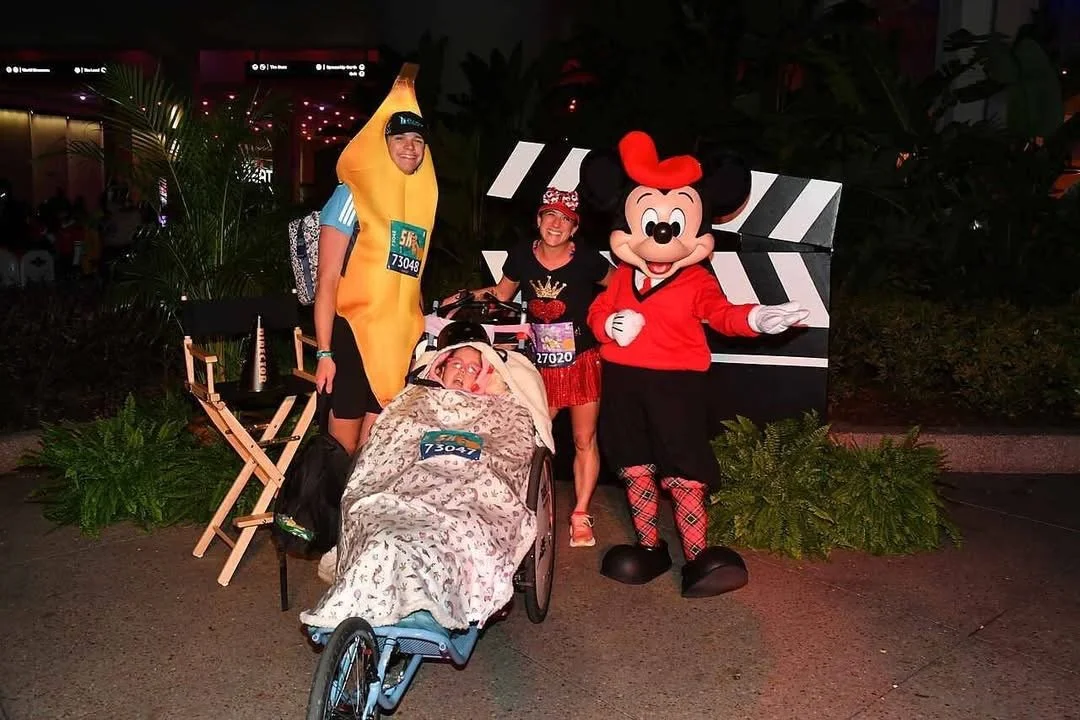
That first Disney 5K wasn’t just about miles. It was about possibilities. Ella loved the adventure, the energy, even stopping for photos with beloved characters along the course. Yet it was the moment she crossed the finish line that changed everything. In that instant, she knew she wanted to do it again.
Outside of racing, Ella’s world is full of color and creativity. She loves baking and cooking in the kitchen, painting bright canvases, playing games, and talking with friends. She’s also a devoted movie fan, especially superhero adventures and heartfelt love stories.
Those who know her best describe her as sweet, kind, and deeply loving. What many people might not realize at first glance is just how smart and thoughtful she is, something her family proudly emphasizes. Too often, people make assumptions based solely on physical appearance. Ella consistently proves there is far more beneath the surface.
But racing? Racing is different. Racing is freedom. Racing has become something that belongs to Ella. It’s an experience that allows her independence and ownership—something that is hers, separate from her parents and daily routines. It represents courage, momentum, and joy.
In 2024, Ella received The Lucye Caplan Broken Wheel Award, which honors an individual’s tenacity and resilience. With the funds from the grant, Ella is purchasing her own race chair, modified for her and her equipment. She is excited to experience the thrill of racing longer distances in her new chair.
Despite facing medical and physical challenges from a young age, Ella remains remarkably positive. She leans on her faith, sings through difficult moments, and keeps her focus forward.
Now, her dreams stretch far beyond a 5K. Ella hopes to run a marathon in Paris one day. It’s a bold goal. But if her first finish line taught her anything, it’s that big dreams start with a single race and a small push forward.
Ella’s story is more than an athletic milestone. It’s a reminder that determination, community, and belief can carry us farther than we ever imagined.